Indian nursing education stands at a critical juncture. Despite over 5,000 nursing colleges operating across the country, India faces a crisis, where a rapidly expanding pool of nursing graduates lack practical readiness and competency required by the healthcare system. As a result – our nation grapples with both quantitative shortages considering 1.96 nurses available per 1,000 people, and qualitative gaps that threaten healthcare delivery.
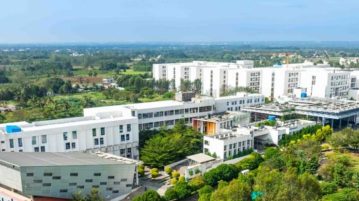
St. Stephen’s Hospital College of Nursing represents precisely the institutional model India needs. Founded in 1908 and among the oldest nursing training establishments in the country, the college has sustained over a century of excellence. Unlike fragmented institutions, St. Stephen’s operates as an organic ecosystem where nursing students learn within a 501-bed multispecialty tertiary care hospital.
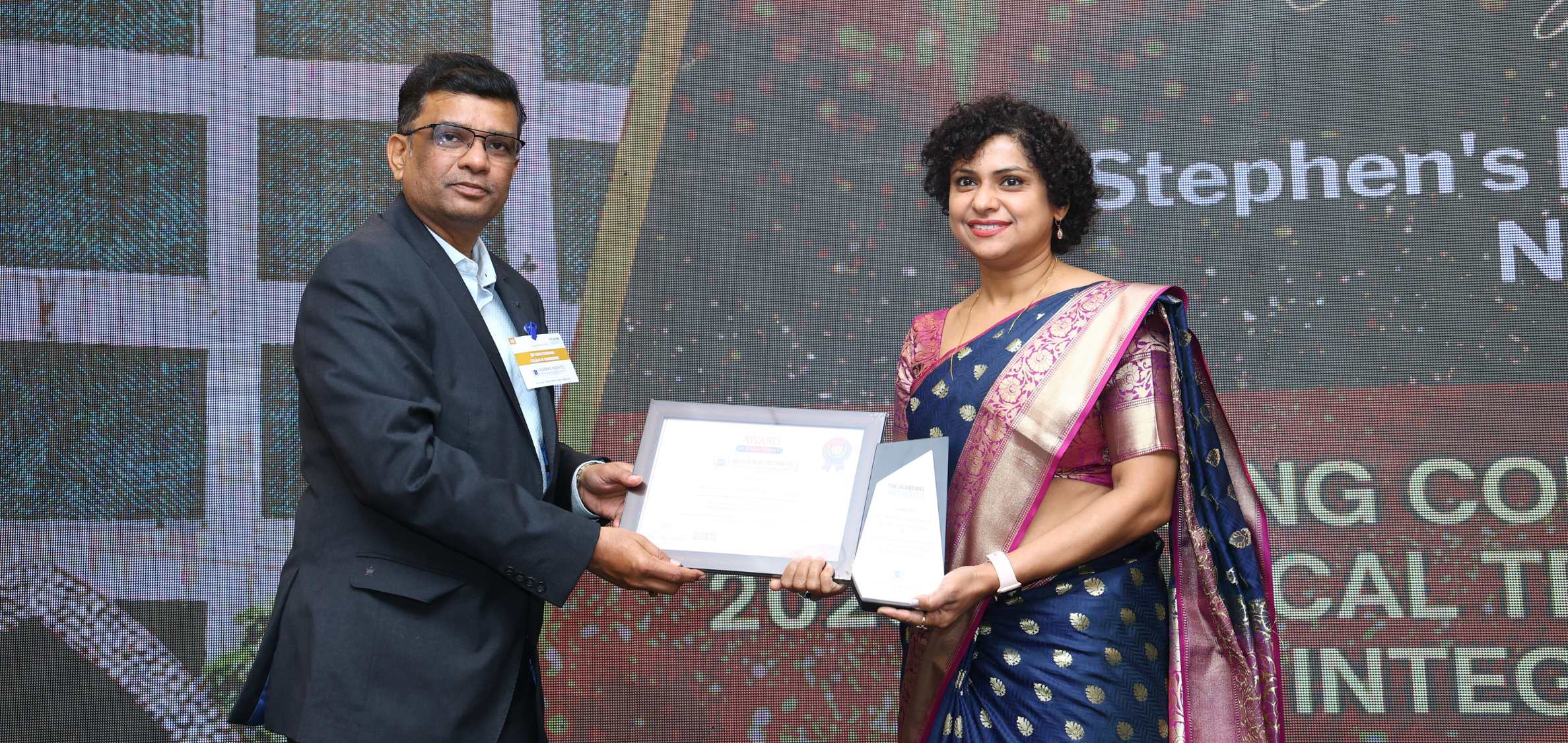
It is with profound confidence in its demonstrated excellence, institutional legacy, and pivotal role in shaping India’s nursing future that Academic Insights presents St. Stephen’s Hospital College of Nursing as the Best Nursing College of the Year 2025.
Century of Integrated Excellence
Established over a century ago, the college remains among India’s oldest nursing institutes, a distinction that reflects not historical prestige alone, but a demonstrated capacity. The institution’s legacy of training nurses across generations has created what Principal Dr. Feba Geevarghese, herself an alumna of the college, describes as an institutional commitment to maintaining curricular discipline that transcends generational shifts and external pressures. “I’m proud to say St. Stephen’s Hospital College of Nursing ranks No. 1 in North India and No. 2 nationally by the Indian Institutional Ranking Framework (IIRF),” she shares, celebrating the institution’s rich heritage.
The college’s defining approach to nursing education is fundamentally integrative rather than compartmentalized. Theory and practice do not exist in isolation; instead, they reinforce one another through a deliberately designed educational architecture. As Dr. Geevarghese articulates, “We have a perfect blend of theoretical classroom and laboratory teaching, complemented with rich clinical experience in our parent hospital, St. Stephen’s Hospital. This integration ensures that students don’t just learn concepts but practice them in real-world settings.” This philosophy translates into a structured progression, where – students master foundational anatomical concepts through advanced mannequins and simulators before encountering actual patients.
St. Stephen’s boasts a highly skilled faculty with diverse experience levels tailored to course requirements. The college supports robust in-service training and continuous professional development through its Continuing Nursing Education (CNE) programs, complemented by hospital initiatives. Management actively encourages faculty to join conferences, seminars, and workshops, both those hosted in-house and external ones. “In 2023, I was sponsored to present my paper at the International Council of Nurses (ICN) Congress in Montreal, Canada, the world’s largest professional nursing body,” shares Dr. Geevarghese, explaining how such opportunities fuel her and the staff’s daily drive to excel. “Besides conferences, our faculty regularly publish research in reputed peer-reviewed journals, with some authoring, co-authoring, and reviewing textbooks,” the principal adds. “A team from our college, led by me as Chief Author and Editor, is currently developing a textbook titled GNM Exam Essentials (A Question Bank with Smart Answer Guide).”
Further, the institution’s structural advantage is its integrated relationship with a 501-bed multispecialty tertiary care hospital. Nursing students encounter authentic clinical scenarios across diverse medical specialties, patient demographics, and acuity levels from the earliest stages of their training. Rather than observing healthcare delivery from a distance, students participate in it under supervision, developing the practical competencies, ethical reasoning, and adaptive thinking that theoretical instruction alone cannot cultivate.
Complete Nursing Ladder
St. Stephen’s Hospital College of Nursing offers a comprehensive suite of four core nursing programs designed to cater to students at various stages of their professional journey. The Diploma in General Nursing and Midwifery (GNM) provides a three-year foundational program that equips students with essential clinical skills and midwifery expertise. This is complemented by the B.Sc. (Hons.) Nursing, a four-year undergraduate degree that delivers a robust curriculum for those seeking comprehensive degree-level qualifications in modern nursing practice.
For diploma holders advancing their careers, the Post Basic B.Sc. Nursing program spans two years, enabling GNM graduates to attain a bachelor’s degree while building on their practical foundation. At the postgraduate level, the Master of Science (M.Sc.) in Nursing offers a two-year pathway for specialization in advanced nursing domains, preparing leaders for research, education, and clinical excellence. While the parent hospital extends allied health courses in radiology, medical records, lab technology, electrophysiology, and DNB-recognized medical education programs, the college maintains its focused mandate on these four nursing streams.
Evolving with Evidence and Innovation
St. Stephen’s Hospital College of Nursing has undergone a steady, structured evolution over the years, aligning itself with national priorities and global best practices in nursing education. Prof. Dr. Feba Geevarghese notes that the curriculum has been periodically revised in line with the National Health Policy and emerging healthcare needs, with the General Nursing and Midwifery (GNM) program shifting from three years to three and a half years, and subsequently readjusting to a three-year format as standards evolved.
A major axis of this evolution has been the deliberate integration of technology and evidence-based practice into everyday teaching-learning processes. The college has also embedded e-learning platforms, multimedia resources, and extensive use of national and international e-journals and literature reviews into its pedagogy, ensuring that both faculty and students remain consistently updated.
Students also build hands-on experience in Community Health Nursing (blending rural and urban settings) at the on-campus St. Stephen’s Hospital Community Health Centre in Sunder Nagri, their adopted community. Here, all St. Stephen’s stakeholders deliver outreach services, fully funded by the hospital.
Wellness, Wins & Wings to Fly
St. Stephen’s Hospital College of Nursing supports needy, financially weak, and deserving students through institutional scholarships and recommendations for government aid. The college’s Counselling Department, staffed by doctors, psychologists, and counselors addresses student stress and coping challenges, while faculty offer career guidance and regular mental health workshops. Students are encouraged to engage in extracurricular activities, both in-house and at intercollegiate or university levels, fostering all-round personality development.
100% Placement, Global Pathways
Boasting of an impressive 100% placement record for its graduates, many alumni of St. Stephen’s Hospital College of Nursing are directly absorbed into the parent hospital as staff nurses. With accumulated expertise, several advance to faculty positions within the college itself, creating a seamless pipeline from student to educator.
Beyond the parent hospital, graduates secure coveted government positions and placements across Delhi and major healthcare centers nationwide. The college’s reputation also facilitates international opportunities, with alumni thriving in countries including the US, Canada, Germany, and Japan. Prof. Dr. Feba Geevarghese highlights the profession’s robust career progression: “Our nursing students have good career progression with numerous opportunities for expanded roles and specializations in areas such as critical care nursing, robotic nursing, and forensic nursing.” This global employability underscores the college’s ability to produce versatile, high-caliber professionals ready for both domestic challenges and international standards.
In the Days to Come
Looking ahead, the nursing institute wants to prioritize skill-based competencies that bridge curricular updates with real-world healthcare needs. Strategic expansion plans include launching a Ph.D. in Nursing program once university-affiliated PhD guides and requisite infrastructure are secured. This forward trajectory ensures St. Stephen’s continues to lead as a hotspot of nursing excellence, preparing nurses who excel globally while addressing India’s critical healthcare requirements.