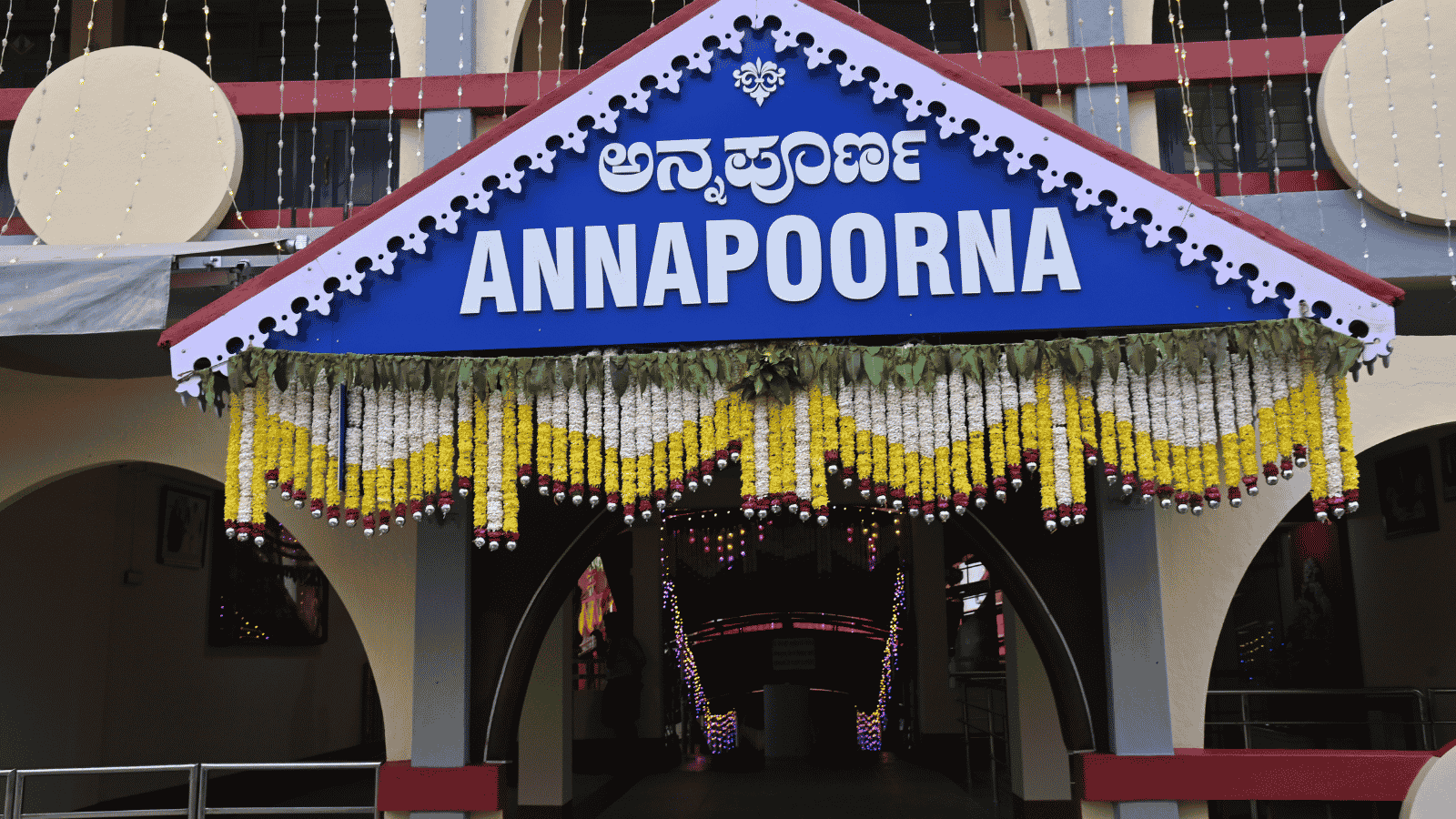
At the heart of the sacred town of Dharmasthala lies Annapoorna kitchen and dining hall, that stands as a living testament to the 800-year-old legacy of the Pergade family. Built on the spiritual foundation of “Annadana”, the gift of food, this institution seamlessly blends ancient traditions with state-of-the-art technology. Under the guidance of Dr. D. Veerendra Heggade and the meticulous management of Chief Operations Officer Shri D. Harshendra Kumar, Annapoorna has become a global benchmark for large-scale, sustainable, and compassionate hospitality.
Massive Scale with Military Precision
The sheer volume of operations at Annapoorna is staggering. On a regular day, the kitchen serves between 25,000 and 50,000 devotees, a feat equivalent to catering 400 wedding feasts in a single afternoon. During major festivals like the Laksh Deepotsav in November, the kitchen scales up to serve approximately one lakh (100,000) pilgrims.
The infrastructure is designed for extreme efficiency. The dining hall spans nearly 19,800 sq. ft. and features nine service lines, each capable of seating 400 people. Remarkably, the entire cycle of seating, serving a wholesome three-course meal, and cleaning up is completed in just 13 minutes per batch, ensuring that no pilgrim is left waiting.
The Logistics of Devotion
Preparing food on such a scale requires a monumental supply chain. For major festivals, the requirements are extraordinary:
-
Rice: 65,000 to 88,000 kilograms.
-
Vegetables: 4,000 kilograms.
-
Sambar & Rasam: 3,000 and 4,000 liters, respectively.
-
Coconuts: Up to 1,600 per day during peaks, sourced from the temple’s own plantations.
Self-sufficiency is a core pillar of the operation. An on-site dairy farm with 125 cattle provides roughly 3,500 liters of milk daily, while the temple’s multi-generational plantations supply lakhs of coconuts, areca nuts, and bananas annually.
Sustainability and Ethical Stewardship
Annapoorna is not just a kitchen; it is an eco-friendly marvel. The design prioritizes waste management and resource conservation:
-
Waste-to-Wealth: Approximately 1,000 kilograms of compost are produced annually from organic kitchen waste and returned to the temple’s fields as fertilizer.
-
Resource Recycling: Even the water used to wash rice, rich in starch, is repurposed as a supplement for the temple’s cattle.
-
Energy Efficiency: The kitchen utilizes high-tech steam cooking and alternate energy sources, significantly reducing its carbon footprint while maintaining the highest standards of hygiene.