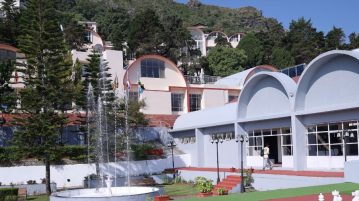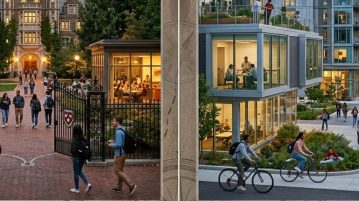
Far away from home, the idea of a holistic academic environment in residential schools may sound reassuring in theory, but its true strength lies in execution. It calls for educators who go beyond conventional instruction to create spaces where students feel safe, supported, and nurtured, much like they would under their parents’ care. At the center of this responsibility are boarding schools, who must design a learning experience that is not only well-structured, but deeply student-centric. This vision blends traditional values with global academic standards, supported by a healthy, enriching routine aimed not just at education, but at shaping students into their best selves.
Many residential schools promise dedicated efforts in this pursuit, but only a few deliver consistently. Among the most distinguished residential institutions, we feature St. Joseph’s School North Point in our edition of “Top 10 Residential Schools in India 2026” for its exemplary commitment to going beyond expectations and truly setting itself apart.
The Jesuit Edge
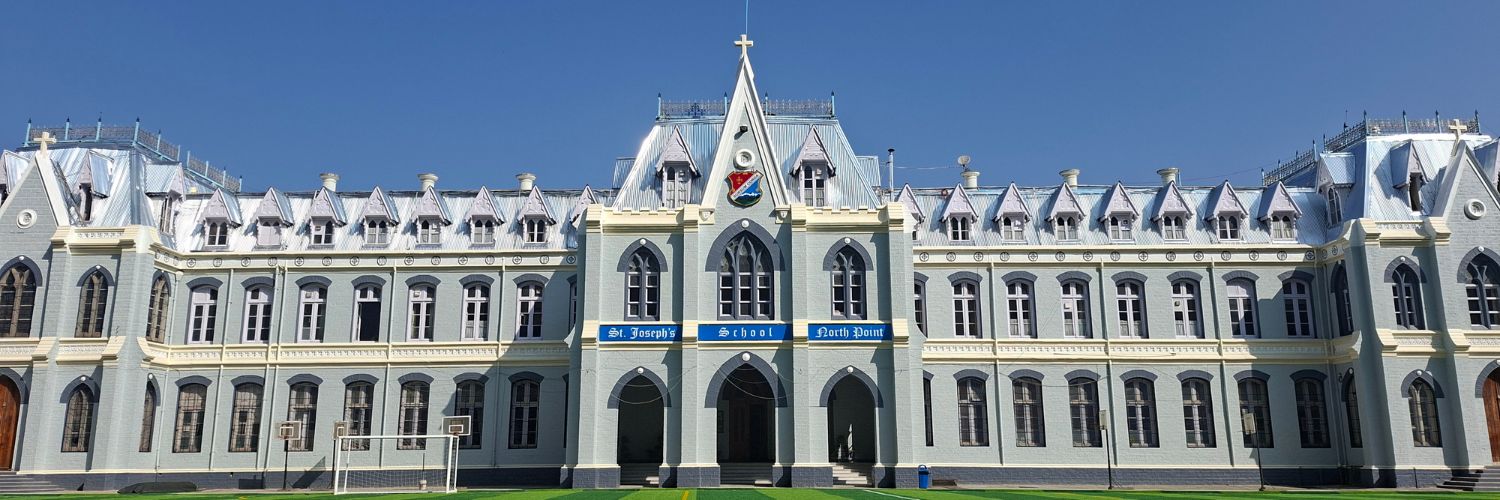
 Established in 1888, perched at 6,515 feet amidst the clouds of Darjeeling, North Point reflects a longstanding commitment to disciplined scholarship while adapting to modern educational expectations.
While adhering to the rigorous ICSE/ISC framework, the school breathes life into the curriculum through the Jesuit principle of Cura Personalis, which means care for the whole person.
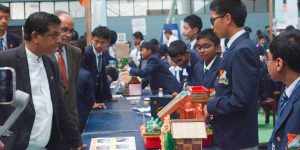
Bridging tradition with the future, the school’s dedicated STEM labs and Robotics wings ensure students are architects of the digital age. In addition, well-equipped laboratories for core scientific disciplines ensure that experiential learning remains central to the academic process.
The Living Campus
As a fully residential institution with over a century of boarding experience, the school has developed a structured environment designed to support both academic and personal development. Hostel systems are supervised by trained residential staff and subprefects, ensuring consistent oversight alongside pastoral care.
Dining facilities are organized with attention to nutrition and hygiene, acknowledging the link between physical well-being and academic performance. Health and safety protocols are supported by on-campus medical facilities and routine monitoring systems. The residential format also facilitates exposure to diverse cultural backgrounds.
A central feature of the institution is the role of faculty as both educators and mentors. Teachers are involved in students’ academic progress as well as their personal development, with interactions extending into residential life through structured study hours and informal guidance.
A Canvas for Potential
The institutional framework recognises that education in a residential setting must extend beyond academic achievement. Sports programmes and extracurricular activities are integrated into daily life, providing structured opportunities for physical development, collaboration, and resilience. Participation in clubs and cultural societies enables students to explore interests in areas such as debate, literature, and the arts, contributing to the development of communication skills and creative expression.
The Road Ahead
The school’s forward planning reflects an alignment with broader educational reforms, including the National Education Policy 2020. The main focus lies on strengthening the relational dimension of education by promoting trust, transparency, and mentorship-driven teaching.
Long-term plans include the expansion of early childhood education and the continued development of a holistic academic model that integrates curricular and co-curricular learning. The institution also aims to extend its reach beyond regional boundaries, positioning itself as a centre for globally relevant education while maintaining its foundational values.
Illustrious Alumni: A Legacy Beyond Classrooms
To speak of St. Joseph’s School, North Point, Darjeeling, is to speak not merely of an institution, but of a living legacy—one that has quietly yet profoundly shaped lives, leadership, and thought across generations and geographies.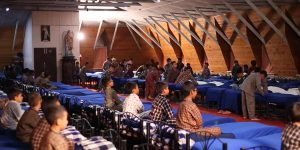
Few schools in the region can lay claim to an alumni body as distinguished and far-reaching. Over the decades, North Point has earned the trust of families from the highest echelons of society, including those of royal heritage, reflecting the institution’s enduring reputation for excellence, character formation, and discretion.
Yet, its legacy is not confined to lineage. Its former students have gone on to serve with distinction in government, diplomacy, and public life, contributing meaningfully to national development and international engagement. Across corridors of power and platforms of influence, their presence has been marked by integrity, intellect, and a quiet sense of purpose.
Beyond the spheres of governance, North Point’s imprint is equally evident in defence, spiritual leadership, literature, and the arts. Its alumni have enriched public discourse, shaped cultural narratives, and contributed to global conversations with depth and nuance.
What unites this diverse and accomplished community is not merely achievement, but a shared formation—one grounded in discipline, empathy, and a worldview shaped amidst the mist-laden hills of Darjeeling. Drawing students from across Bhutan, Nepal, Sikkim, Tibet, and beyond, North Point has long stood as a confluence of cultures and a crucible for leadership.