In this fast-paced, hyper-connected landscape we live in, a quiet yet profound revolution is taking place in Indian education. For years, the trend leaned toward co-educational “mega-campuses,” but today, the pendulum is swinging back with a purpose. Girls’ boarding schools are experiencing a remarkable renaissance, evolving from the traditional, sheltered institutions of the past into dynamic, high-octane launchpads for the modern woman.
As the digital world becomes louder and more complex, families are no longer just looking for a school. Instead, they are looking for a sanctuary where their daughters can lead without hesitation, experiment without judgment, and grow without the shadow of societal pressures.
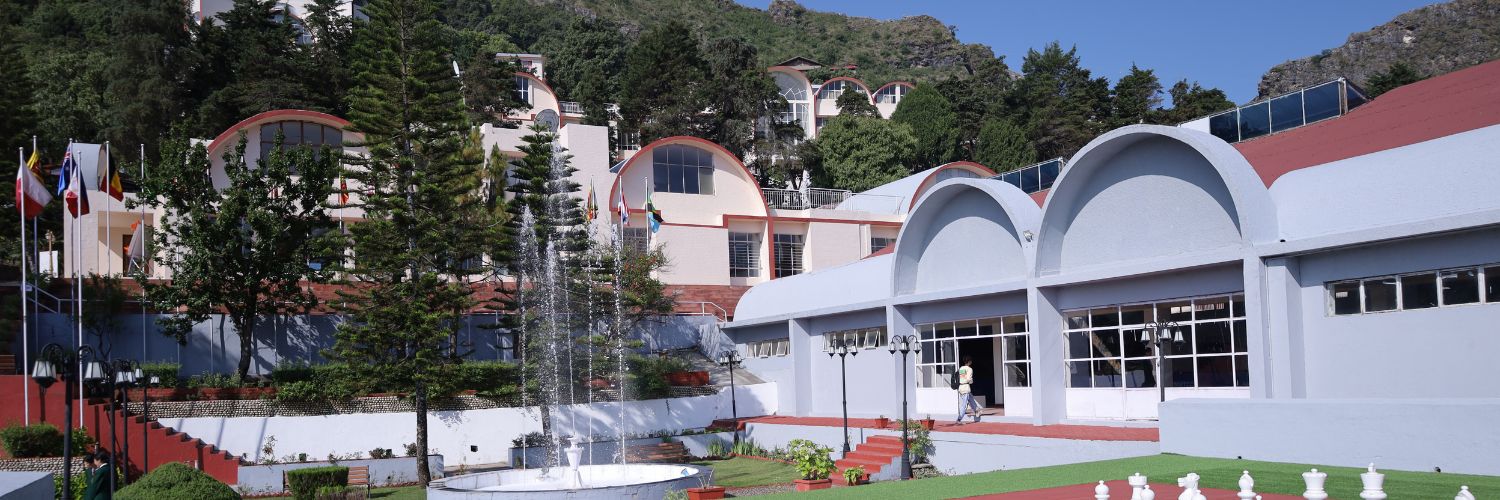
It is within this cultural shift that Mussoorie International School (MIS) has emerged not just as an institution, but as a beacon. Perched 33 kilometers above the bustling city of Dehradun, amidst the serene whispers of pine and deodar forests, MIS offers a literal and metaphorical “higher perspective.” Since its inception in 1984, the school has mastered the art of “Professional Parenting”, a delicate ecosystem where empowerment is the ultimate goal. It is this unique mastery of blending heritage with a progressive, empowerment-focused model, that has secured Mussoorie International School a prime spot among ‘Top 10 Residential Schools in India 2026’.
Ancient Roots, Modern Wings
 Established in 1984 as an all-girls school, MIS was envisioned by Gurudev Pandit Shri Ram Sharma Acharyaji, an eminent philosopher, social reformer, and founder of the All World Gayatri Pariwar, which comprises approximately 150 million members and 5,000 centers worldwide. By merging the IB Continuum (PYP, MYP, DP) and Cambridge programs with a foundation in Indian heritage, Uttarakhand’s only IB Continuum School prepares students for the future without losing sight of their roots.
MIS distinguishes itself by fostering a profound culture of independence that permeates every facet of residential life. From managing personal routines in the hostel to organizing daily schedules, students are encouraged to take ownership of their growth from their very first day. This self-reliance is further nurtured through a robust mentorship model where seniors naturally guide juniors. In shared spaces like dormitories and playgrounds, these interactions transform everyday life into a rich environment for emotional and social development.
The Human-Tech Balance
As we look toward the demands of 2026 and beyond, MIS has moved far beyond the traditional role of a school, where the shift begins with the role of the educator. At MIS, teachers have transitioned from “information providers” to mentors and facilitators. Utilizing a Competency-Based Framework, the focus is shifted from memorizing “what” to exploring “why” and “how”. This is most evident in their Flipped Classroom and Blended Learning models.
Importantly, the onboard faculty members are motivated to take part actively in regular professional development programs, through workshops on emerging pedagogical strategies, digital tools, and global educational trends. Also, collaborative lesson planning, peer observations, and feedback cycles strengthen instructional quality, resulting in a prevailing culture of continuous improvement.
Cultivating the Mindful MIStar
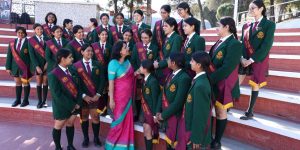 Recognizing that the modern woman must be a global citizen, the school provides a formidable academic experience. Whether a student follows the structured international flexibility of Cambridge, or the research-driven rigour of the IB Continuum, the goal of empowerment remains the same.
However, at MIS, “academic excellence” isn’t measured solely by percentage points. It is viewed through the lens of Vedic wisdom. The school integrates ancient philosophical tenets with modern pedagogical tools, creating a rhythm of life that begins long before the first textbook is opened.
A typical day at MIS begins with a “Sacred Beginning”, school assembly that serves as the soul of the institution. As the auspicious lamp is lit, symbolizing the removal of ignorance, the chanting of the Gayatri Mantra and collective meditation sessions settle the mind. By the time students enter the classroom, they are calm, centered, and intellectually primed to engage with complex global concepts.
This spiritual grounding extends into the very lifestyle of the campus. From the Satvik vegetarian meals preceded by prayers of gratitude to the weekly Gayatri Havan, students live a life of “mindful discipline.” Though the student orchestra masters Western classics, the presence of the Sitar and Tabla in assembly reminds everyone of their Indian heritage, mindfully using music to bridge the cultural gap between East and West. Additionally, by hosting global spiritual leaders and organizing orientations at Shantikunj, MIS ensures its “MIStars” are grounded in Sanatan heritage.
Learning Without Walls
 At MIS, the definition of a “classroom” is fluid. The school’s sprawling 40-acre forested campus is more than just a scenic backdrop, but a divine, pollution-free haven.
Teachers frequently lead students out of traditional buildings for nature walks, science investigations, and project-based learning. In this living laboratory, MIStars don’t just read about biology, they observe ecosystems firsthand, study plant adaptations in the Himalayan soil, and cultivate a deep sense of ecological sensitivity. A standout example of this applied learning is the student-led Herbal Garden, where girls grow and maintain medicinal plants.
This connection to the earth extends seamlessly into physical wellness. The expansive green fields are the heart of the school’s “general fitness” philosophy. Whether it is football, cricket, athletics, or gymnastics, the open air adds a layer of vitality to every movement. Yoga and meditation sessions, conducted amidst the pines with views of the Himalayas, transform simple exercise into a practice of mental clarity and mindfulness.
Complementing this natural freedom is a sophisticated sense of security. Situated near the prestigious Lal Bahadur Shastri National Academy of Administration, the school enjoys an environment of unparalleled tranquility and safety.
The school’s commitment to breaking gender barriers in technology is anchored in its state-of-the-art Robotics Lab. Here, MIStars dive into coding, automation, and mechanical design. This “hands-on” philosophy is augmented by Virtual and Augmented Reality (VR/AR) tools, allowing students to virtually walk through historical sites or visualize complex molecular structures in 3D. Even the night sky becomes a classroom through the campus telescope, where guided astronomical observations turn theoretical physics into a tangible sense of wonder.
A Miniature World with a Global Voice
Beyond the rigorous academics and the serene campus lies its vibrant, multicultural community, where MIS stands as a miniature global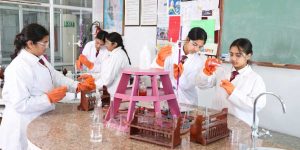 village, housing students from over 27 different countries. This diversity isn’t just a statistic, it is the catalyst for a daily global dialogue that transforms every classroom discussion.
This international-mindedness is brought to life through platforms like the Model United Nations (MUN), where MIStars step into the shoes of global diplomats. By debating pressing issues like climate change and sustainable development, students move beyond the role of “pupil” and take on the mantle of “problem-solver.” This commitment to the planet is further solidified through the active integration of the United Nations Sustainable Development Goals (SDGs) into the school’s DNA.
Visionary Leadership for a Boundless Future
The sustained excellence of Mussoorie International School is no accident, but perhaps the result of visionary leadership that bridges deep compassion with global educational standards. At the helm as Chief Mentor is Dr. Shayama Chona, a titan of Indian education and the only school educator to be honored with both the Padma Shri and Padma Bhushan. An alumna of MGD and the former Principal of DPS R.K. Puram, Dr. Chona’s life is a “confluence of compassion,” driving MIS toward a future where technology and inclusivity go hand-in-hand.
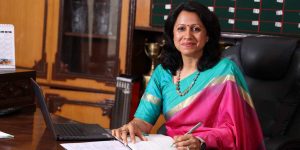
This vision is brought to life by Principal Mrs. Shallu Babbar, whose leadership ensures that the school’s progressive pedagogy remains deeply personal and student-centric.
The combined work displayed by the hard working team of MIS has yielded a series of 2026 milestones and accolades from prominent educational summits and publications. Notably, the school remains among an elite group in India to hold the Council of International Schools (CIS) accreditation, which is a global benchmark for excellence in governance.
All in all, as we look toward the horizon of 2026, Mussoorie International School stands as more than just a premier institution, rather it is a testament to what is possible when heritage, heart, and high-performance education converge. For the young women walking its halls today, the mountains are not just a home, they are the starting point for a journey that knows no bounds.