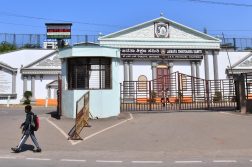
Dharmasthala is considered a miracle of harmony, where different faiths co-exist peacefully. It is also known for upholding four traditional Danas: Food being one of the important Danas, at Dharmasthala since ages – free food is served to all pilgrims at the famous Annapoorna Dining Hall.
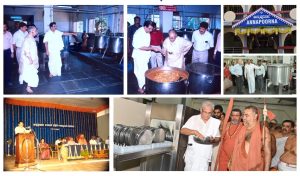
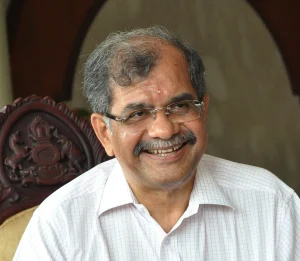
Technology Meets Tradition: The Annapoorna dining hall at Dharmasthala Temple in Karnataka is built on an 800 year-old legacy maintained across 21 generations. The institution combines ancient traditions with modern technology while preserving spiritual values. Dr. D. Veerendra Heggade, the temple’s Chief Administrator, oversees this sacred responsibility that has been passed down through his family since the temple’s foundation.
Massive Scale Operations: On regular days, the mega kitchen serves approximately 25,000 to 50,000 devotees, which is equivalent to catering for about 400 wedding feasts in a single day. During the Laksh Deepotsav festival, the final day of a five-day celebration in November, the kitchen prepares to serve approximately 1 lakh (1,00,000) devotees – marking the busiest service of the year.
Infrastructure and Efficiency: The dining hall spans approximately 19,800 sq.ft. with 9 service lines, each capable of seating around 400 people at a time. Remarkably, the entire Process of seating devotees, serving food and cleanup is completed in just 13 minutes per batch.
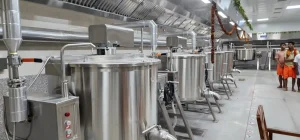 Food Preparation and Quantities: During festival preparations, the kitchen requires massive quantities of ingredients:
-
- 65,000-88,000 kilograms of rice (with an option to prepare more, if there is a larger crowd)
- 4,000 kilograms of vegetables
3,000 liters of sambar , 4,000 liters of rasam , 1,000 to 1,600 coconuts (compared to 750 on regular days)
Ingredient Sourcing: The temple’s multi-generational plantations provide crucial self-sufficiency:
-
-
- 6-7 lakh coconuts annually from temple estates
- 10 lakh (1 million) areca nuts annually
- 2-3 lakh bananas annually (banana leaves used in dining service)
- On-site dairy farm with 125 cattle providing approximately 3,500 liters of milk daily
- Rice washing water (containing starch) used to supplement cattle feed
-
Sustainable Practices: The kitchen implements comprehensive waste management:
-
- Produces 1,000 kilograms of compost annually from organic waste, which is returned to temple fields
- Organic waste composted environmentally
- Kitchen design specifically planned for waste management efficiency