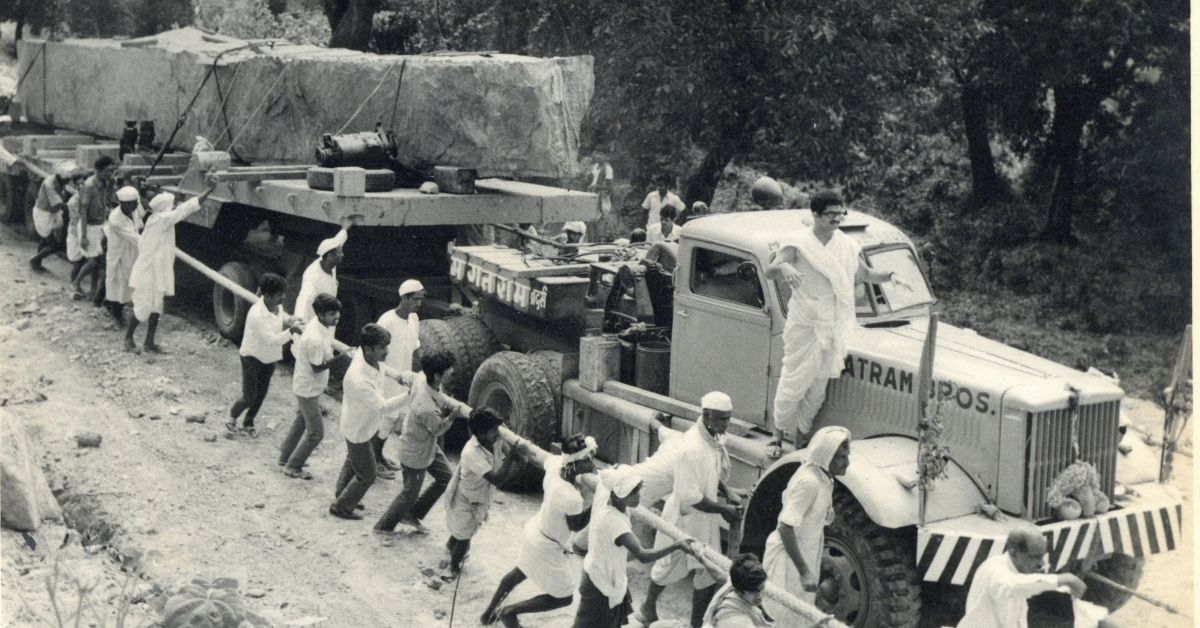
Dr. D. Veerendra Heggade’s first major act as Dharmadhikari was not to retreat but to complete what his father had begun. Late Ratnavarma Heggade had dreamed of erecting a monumental 39-foot statue of Bahubali, the spiritual symbol of self-conquest and detachment, atop Ratnagiri hill in Dharmasthala. The sculpture work had begun in 1967 at Karkala, a grueling, meticulous task by master sculptor Renjala Gopalakrishna Shenoy. Now, with a 170-tonne monolith and 1970s technology that had no hydraulic cranes or rigging equipment, the young Dharmadhikari – Veerendra Heggade took on the task of transporting and installing the colossus.
Special vehicles were designed in Mumbai. The sculpture traveled on a handmade trolley from Karkala to Dharmasthala, a 64-kilometer journey that took three days, with breakdowns and repairs along the way. But on August 1975, the 39-foot, 170-tonne monolithic statue was successfully installed, standing as the second-highest Bahubali statue in the world, second only to Gomateshwara at Shravanabelagola.
For a twenty-year-old who had just inherited centuries of tradition, completing this feat was a statement – “He was not merely a custodian of the past; he was an architect of the future”.
As the Bahubali statue rose against the Dharmasthala sky in 1975, a silent message was being sent. The new Dharmadhikari was ready to transform tradition into action, vision into reality, and dreams into monuments that would inspire generations.