
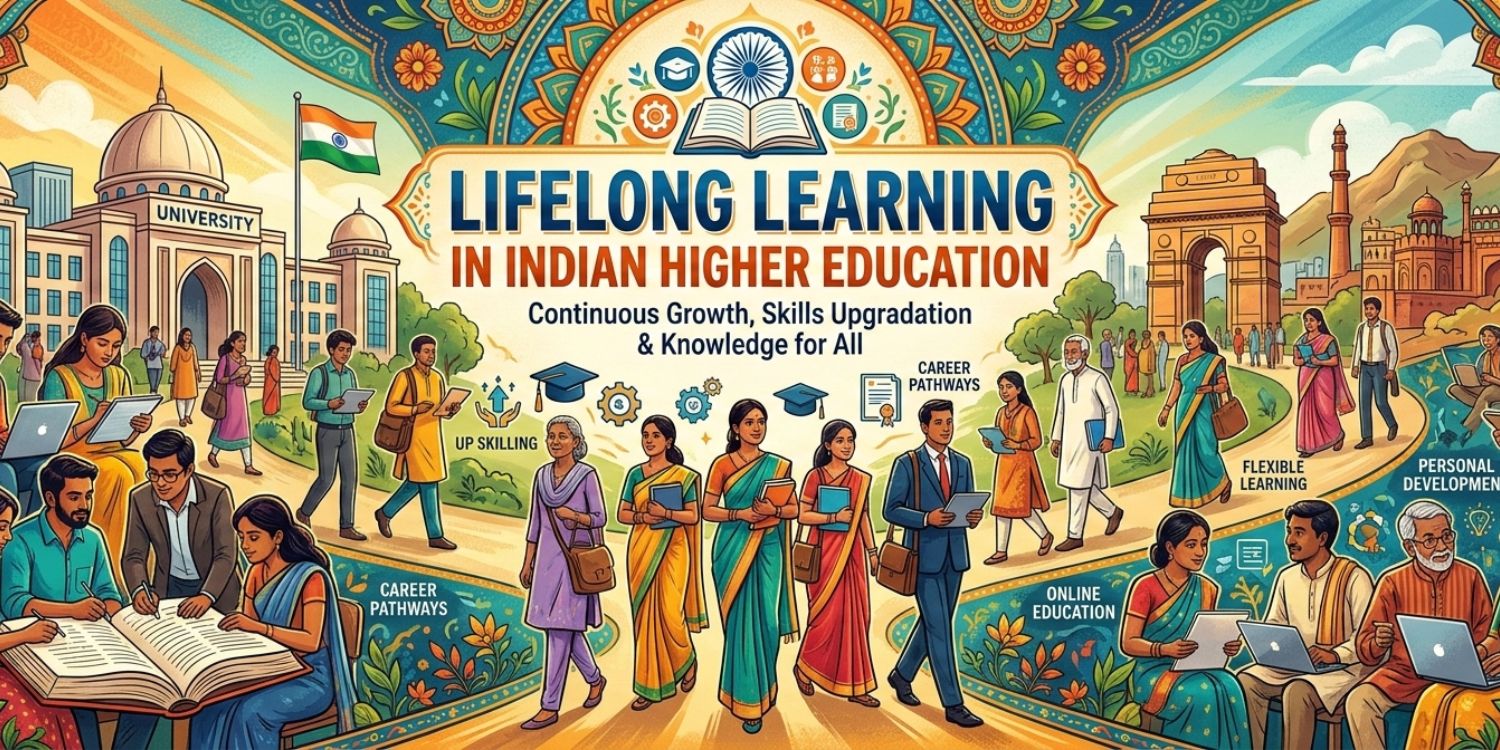
As India’s higher education hurtles toward 2027, lifelong learning emerges as the defining paradigm, propelled by NEP 2020’s flexible frameworks and visionary leaders celebrated at the Academic Insights Education Excellence Awards & Summit 2026. No longer confined to campus walls, education morphs into a seamless continuum, micro-credentials, stackable certifications, and interdisciplinary pathways empowering graduates to upskill amid AI disruptions and gig economies. Summit honorees, from distinguished universities to B-schools, preview this horizon, blending academic rigor with real-world adaptability.
NEP’s National Credit Framework (NCrF) anchors this shift, enabling credit accumulation from diverse sources: formal degrees, vocational training, online MOOCs via SWAYAM, and experiential learning like internships. Students can exit after one year with a certificate, two with a diploma, or complete four for a full degree, portable via the Academic Bank of Credits (ABC). Visionary chancellors are operationalizing this, designing curricula where engineering students stack AI micro-credentials with liberal arts modules on ethics, fostering T-shaped professionals: deep expertise plus broad versatility.
By 2027, trends point to explosive growth in hybrid models. Distinguished universities pioneer digital ecosystems, VR simulations for lab work, AI-personalized adaptive learning, and gamified platforms boosting engagement 30-40%. B-schools lead with industry co-created programs, offering stackable badges in data analytics, sustainability leadership, and blockchain, directly addressing 2026’s 50% employability skill gap. Pharmacy and biotech institutes extend lifelong pathways via alumni portals for continuous clinical upskilling, while engineering powerhouses embed IoT certifications for lifelong Industry 4.0 relevance.
Interdisciplinary silos accelerate: tech fused with humanities, management with green innovation. Leaders advocate global twinning programs, allowing credits from foreign partners to count toward Indian degrees, elevating research output from today’s 0.7% GDP spend. Rural-urban equity thrives too, with mobile apps delivering micro-courses to remote learners, closing divides highlighted in summit panels.
Challenges demand resolve: faculty reskilling, data privacy in AI tools, and equitable access. Yet, pragmatic women leaders and chancellors, echoing 2026 awardees, push inclusive models, from mental health-integrated platforms to subsidized credentials for underrepresented groups. Public-private synergies, like those with NASSCOM, ensure curricula evolve dynamically.
This horizon transcends trends; it’s a leadership manifesto. Summit visionaries prove lifelong learning cradles ethical innovators, not obsolete graduates. As India targets 50% GER by 2035, their blueprints, flexible credits, hybrid immersion, relentless upskilling, ignite a ripple. Stakeholders must unite: government funding NRF hubs, industry internships, academia innovating boldly. By 2027, every citizen becomes a perpetual learner, propelling India to knowledge superpower status. The next summit beckons this unified revolution.