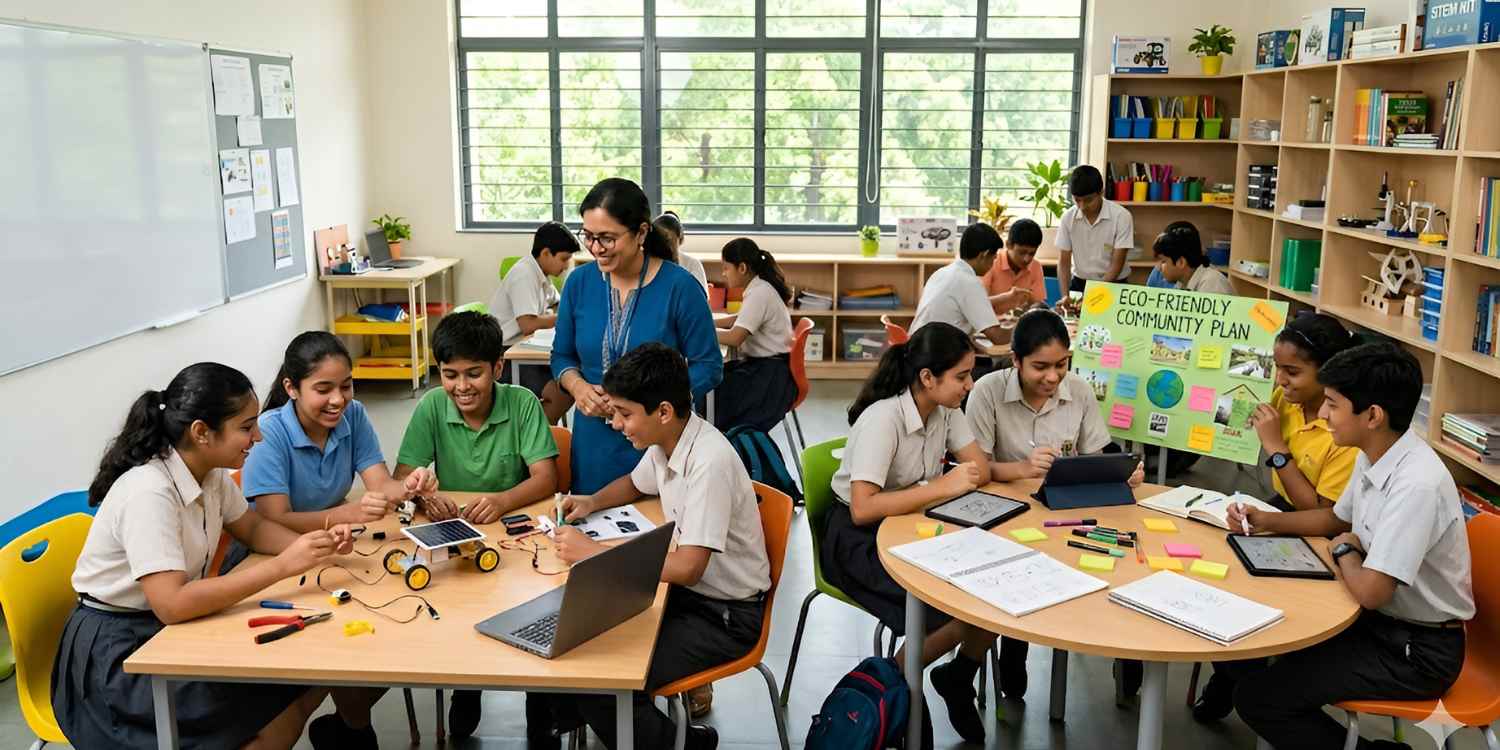
In 2026, India’s education landscape is undergoing a profound shift, driven by the deepened implementation of the National Education Policy (NEP) 2020. The old emphasis on rote memorization and syllabus completion is giving way to a powerful mantra: skill over syllabus. At the heart of this transformation are project-based learning (PBL) and experiential learning, approaches that prioritize hands-on application, critical thinking, creativity, and real-world relevance.
NEP 2020 envisions education as holistic, flexible, and student-centered. It promotes activity-based, inquiry-driven methods across stages, play-based in foundational years, discovery-oriented in preparatory, and multidisciplinary projects in middle and secondary levels. Experiential learning integrates arts, sports, storytelling, internships, and community projects, fostering not just knowledge but competencies like problem-solving, collaboration, and emotional resilience. The policy’s reduced curriculum load frees space for these meaningful engagements, while competency-based assessments focus on process and application rather than mere recall.
Top schools across India are leading this charge. In CBSE institutions, art-integrated and multidisciplinary projects are now standard. Students analyze household energy consumption to design sustainable solutions, launch social awareness campaigns on climate change, or develop entrepreneurial business models. IB and international schools excel with inquiry-based projects that encourage global perspectives and cross-cultural collaboration. Examples from leading schools include STEM eco-models, community-driven initiatives like civic campaigns, and hands-on environmental explorations in diverse ecosystems. These activities build deeper retention, boost confidence, and prepare students for an unpredictable future where adaptability trumps rote expertise.
The benefits are clear: PBL nurtures lifelong learners who connect concepts across subjects, tackle real issues, and develop tech-savvy research skills. It aligns perfectly with NEP’s goals of equity, inclusivity, and “learning how to learn,” bridging gaps through reflection, action, and holistic evaluation (self, peer, and teacher).
As we celebrate India’s top schools in this issue, it’s evident that the pioneers aren’t just teaching subjects, they’re empowering students to create, innovate, and contribute. In 2026, true excellence lies not in covering the syllabus, but in mastering skills that endure beyond the classroom.