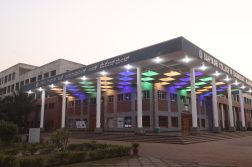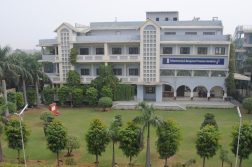
While Chennai is often celebrated as the intellectual capital of South India, a quieter but equally powerful revolution has been unfolding along the National Highways of Western Tamil Nadu. Spanning the stretch between Coimbatore, Erode, and Salem, this region, often referred to as the “Kongu Belt”, has evolved into a formidable “Knowledge Belt.” In 2026, this corridor stands as the backbone of India’s technical and vocational education, seamlessly blending academic rigor with the grit of industrial manufacturing.
A Legacy of Self-Reliance
The rise of the Coimbatore-Salem Knowledge Belt is not an accident of geography; it is a result of a unique cultural DNA centered on entrepreneurship. Historically known for its textile mills and pump manufacturing, the region realized early on that to sustain its industrial growth, it needed a steady stream of homegrown technical talent.
Unlike other educational hubs that rely heavily on IT and service-sector placements, the institutions in this belt, such as the KPR Institute of Engineering and Technology in Coimbatore and the R P Sarathy Institute of Technology in Salem, have maintained a steadfast focus on core engineering and “applied” sciences. This has created a self-sustaining ecosystem where the local industry funds the labs, and the labs, in turn, modernize the industry.
The “Classroom-to-Factory” Pipeline
In 2026, the hallmark of this region is the “Classroom-to-Factory” model. Education here is visceral. Students at institutions like the Karunya Institute of Technology and Sciences aren’t just learning from textbooks; they are solving real-world challenges for the surrounding MSMEs (Micro, Small, and Medium Enterprises).
This corridor has pioneered the “Integrated Industry Campus” concept. It is common to find a precision tool manufacturing unit or a textile research center located within or adjacent to college campuses. This proximity ensures that by the time a student graduates, they have already clocked hundreds of hours of shop-floor experience, making them some of the most “employable” graduates in the country.
Specialization over Generalization
What sets the Coimbatore-Salem belt apart in the current educational scenario is its move toward hyperspecialization.
- Coimbatore has emerged as a global hub for Mechatronics and Automobile Engineering, feeding into the city’s massive auto-component sector.
- Erode and Salem have carved a niche in Technical Textiles and Green Energy.
- With the region’s strong agricultural roots, many institutions have introduced specialized degrees in Agri-Tech and Food Processing, ensuring that the next generation of farmers is equipped with data-driven insights.
Beyond the Degrees: A Focus on Character
The “Knowledge Belt” is also distinct in its pedagogical approach. There is a perceptible emphasis on discipline and value-based education. Many of the top-performing private institutions here are founded by industrial philanthropists who view education as a social responsibility. This results in a campus culture that prioritizes professional ethics and “soft skills” alongside technical expertise, a combination that the 2026 job market values immensely.
Navigating the Future
As Tamil Nadu targets a trillion-dollar economy, the Coimbatore-Salem Knowledge Belt is the engine room of that ambition. The focus for 2026 and beyond has shifted toward Sustainability and Industry 5.0. We are seeing a surge in research centers dedicated to EV (Electric Vehicle) battery technology and circular fashion, proving that this belt is not just keeping pace with global trends but setting them.
For any student or parent looking beyond the glitz of metro cities, the Western Knowledge Belt offers something far more sustainable: a career rooted in the reality of production, innovation, and the undeniable spirit of “Kongu” resilience. It is here that the future of “Make in India” is being written, one lecture, one lab experiment, and one factory shift at a time.