
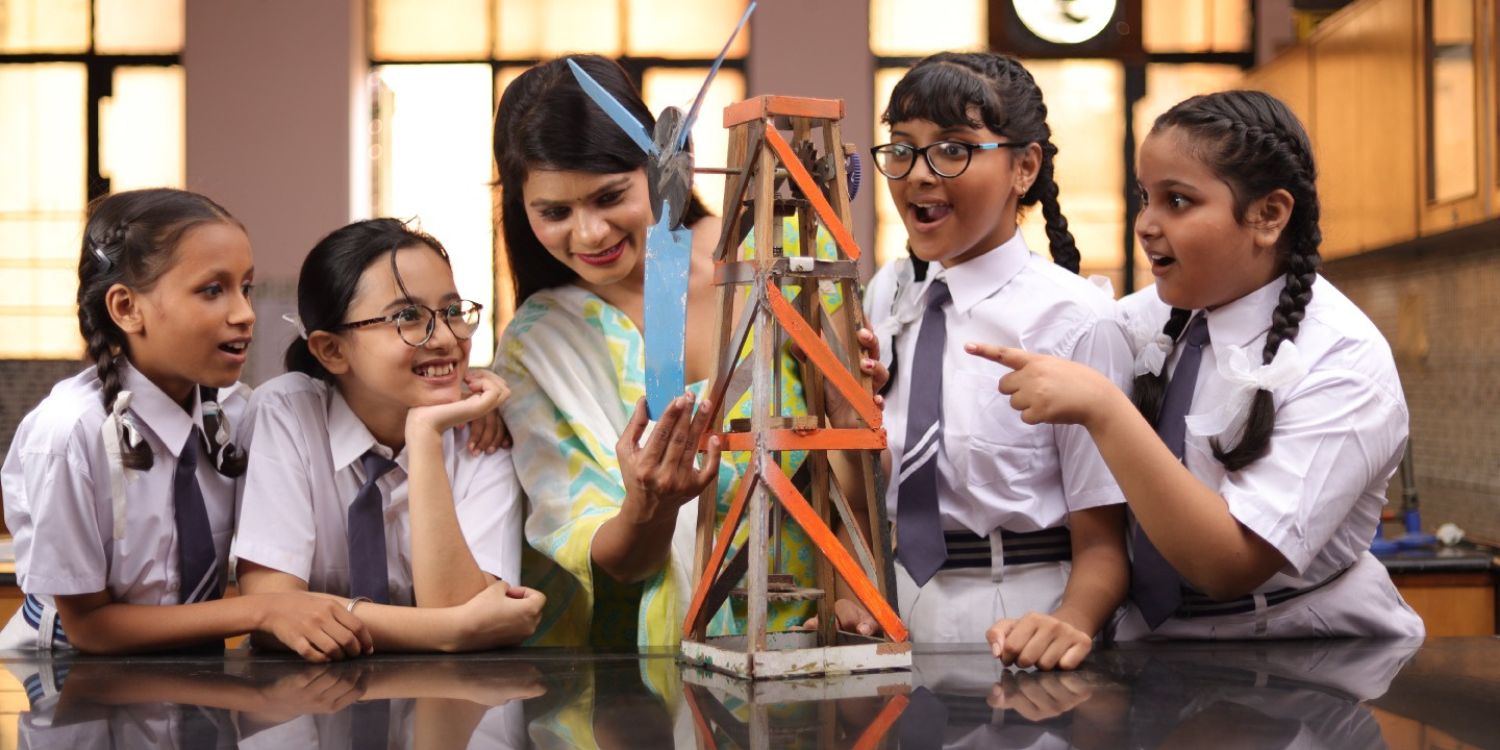
In 2026, Project-Based Learning (PBL) has become the heartbeat of India’s K-12 transformation, aligning seamlessly with the National Education Policy (NEP) 2020’s vision for experiential, skill-centric education. Moving beyond rote memorization, PBL immerses students in real-world challenges, fostering inquiry, collaboration, critical thinking, and creativity across CBSE, ICSE, Cambridge, and IBDP boards. From designing sustainable urban models in Grade 8 to prototyping community health apps in high school, PBL turns passive learners into active problem-solvers, preparing them for a dynamic global economy.
PBL’s core lies in its student-driven structure: a driving question sparks investigation, leading to interdisciplinary projects culminating in tangible outcomes like prototypes, reports, or community presentations. CBSE schools lead with NEP-mandated art-integrated and multidisciplinary projects, such as analyzing local pollution data to propose green solutions—boosting retention by 30-40% per recent studies. ICSE emphasizes depth, with projects blending literature and science, like scripting historical documentaries that enhance language proficiency alongside historical empathy. Cambridge IGCSE leverages inquiry cycles for global issues, encouraging hypothesis-testing in environmental science units. IBDP’s rigorous Extended Essays and Creativity, Activity, Service (CAS) components exemplify PBL at its finest, integrating theory of knowledge with real-world action research.
Implementation varies by board but follows universal best practices. Teachers begin with curriculum-aligned driving questions, scaffolded into phases: research, ideation, prototyping, feedback loops, and reflection. In CBSE settings, tools like rubrics ensure assessment of process (teamwork, persistence) alongside products, with 20% weightage in internals as per circulars. ICSE schools incorporate peer reviews for communication skills, while Cambridge and IBDP use exhibitions for stakeholder feedback, mirroring professional environments. Hybrid models thrive post-pandemic: digital platforms like Google Workspace enable remote collaboration, vital for diverse boards blending online-offline learning. Challenges like resource gaps in rural areas are met with low-tech adaptations—community surveys via mobiles or recycled materials for engineering prototypes.
Evidence of impact is compelling. PBL schools report 25% higher engagement, reduced dropout rates, and superior 21st-century skills, aligning with NEP’s 5+3+3+4 structure that reserves time for hands-on exploration. Award-winning institutions, such as those from recent Education Excellence summits, showcase PBL’s equity potential: tier-2 CBSE schools partner with NGOs for solar-powered labs, while IBDP pioneers in metros train peers via train-the-trainer models. Teacher upskilling through NISHTHA and platforms like DIKSHA is crucial, with 70% reporting confidence post-training. Parental buy-in grows via showcases, bridging home-school divides.
Yet, scaling PBL demands commitment. Overburdened educators need ongoing support, and assessments must evolve beyond exams to portfolios. Policymakers can amplify by funding maker-spaces and integrating PBL into board exams via practical components.
As India’s K-12 evolves, PBL isn’t a trend—it’s the bridge to holistic excellence. By empowering students across boards to tackle authentic problems, schools cultivate innovators who don’t just learn about the world but reshape it. The future of education is project-driven, board-agnostic, and brilliantly Indian.