
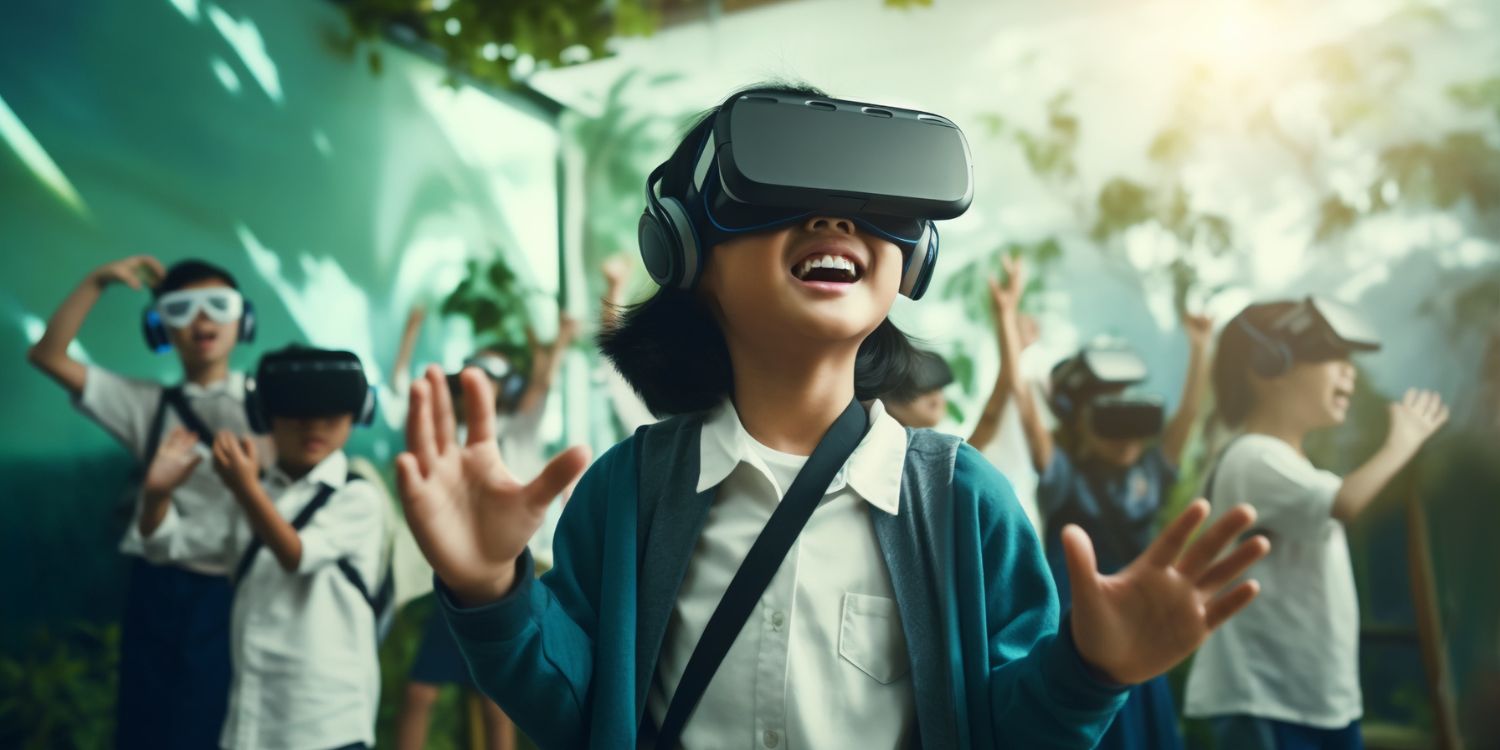
In 2026, India’s K-12 classrooms are leaping into immersive realms, with Virtual Reality (VR) and Augmented Reality (AR) redefining experiential learning under the National Education Policy (NEP) 2020. These technologies transport students beyond textbooks, enabling virtual dissections, historical reenactments, and solar system explorations across CBSE, ICSE, Cambridge, and IBDP boards. From Grade 1 AR animal habitats to high school VR climate simulations, VR/AR fosters deep engagement, spatial reasoning, and empathy, equipping 260 million learners for a sensory-rich, future-ready world.
The momentum builds on NEP’s push for multidisciplinary, hands-on pedagogy amid post-pandemic hybrid shifts. Traditional diagrams pale against VR’s 360-degree Roman Empire tours or AR overlays animating chemical reactions, research shows 75% retention gains versus 10% from lectures. CBSE integrates AR via apps like Merge Cube for geometry, aligning with art-integrated projects. ICSE leverages VR for literature, immersing students in Shakespearean stages to grasp nuance. Cambridge IGCSE embeds AR in science inquiries, while IBDP’s global simulations tackle TOK dilemmas like ethical dilemmas in virtual pandemics.
Rollout follows an accessible, phased blueprint. Foundational grades start with mobile AR, no headsets needed, scanning textbooks to summon 3D dinosaurs or fractions manipulatives. Middle school introduces affordable VR goggles (under ₹2000 via government subsidies), with projects like designing AR city plans addressing urban flooding. Teachers, trained through NISHTHA’s VR modules, guide inquiry cycles: exploration, collaboration via shared virtual spaces, prototyping mixed-reality exhibits, and reflective portfolios. Low-resource adaptations thrive, cardboard viewers pair with free platforms like CoSpaces Edu, bridging 40% rural-urban device gaps. Cross-board hackathons foster innovation, with student-created AR heritage trails shared district-wide.
Impact metrics dazzle: 50% attendance spikes, 30% STEM score uplifts, and heightened inclusivity for neurodiverse learners via customizable immersion, per 2025 ASER insights. Award-winning Excellence summits spotlight trailblazers: Tier-2 CBSE schools deploy solar-powered AR kiosks, while IBDP pioneers in metros collaborate with IITs for haptic feedback prototypes. Parental portals preview VR lessons, easing tech anxieties and linking home experiments to school outcomes. Challenges like motion sickness and content localization persist, but NEP-backed edtech funds and open-source repositories accelerate solutions.
Leaders curate immersive ecosystems: Maker corners with Oculus Quest clones, SEL integrations to debrief emotional VR narratives, and equity audits ensuring girls’ 50% project leads. CBSE’s internal assessments now credit VR portfolios at 25%, shifting from exams to experiential mastery. Cambridge excels in global VR exchanges, while ICSE blends AR with vocational design thinking.
Scaling requires bold moves: Nationwide VR labs in DIETs, AI-curated multicultural content in regional languages, and PPPs for bulk headset procurement. NEP’s 5+3+3+4 framework carves playtime for AR gamification, making immersion foundational.
VR and AR aren’t gimmicks, they’re portals to embodied knowledge, turning abstract concepts into lived adventures. India’s K-12 visionaries, wielding these tools, are not just teaching, they’re teleporting students to possibilities unbound, crafting experiential architects for tomorrow’s world.