
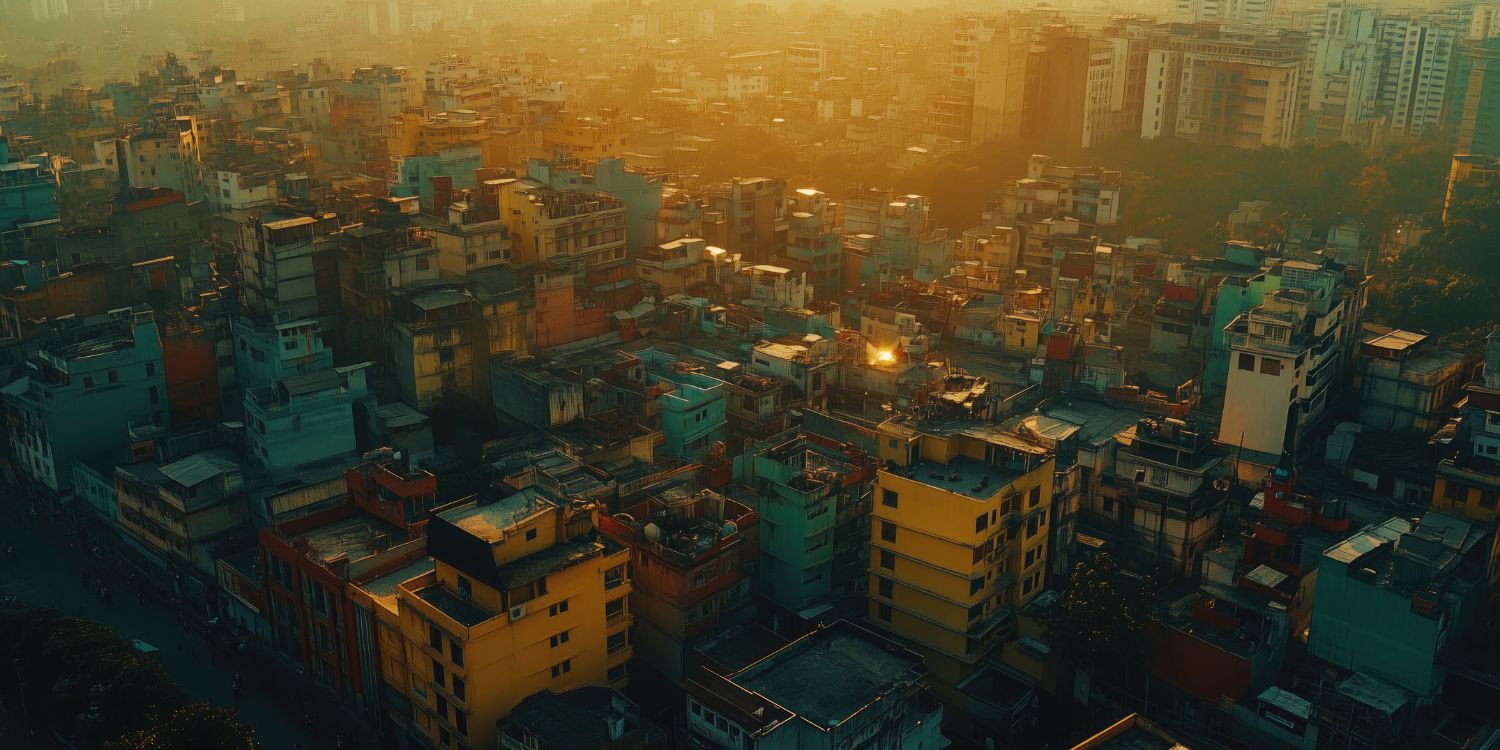
As Indian cities face increasingly severe summer temperatures, a dangerous climate phenomenon has taken center stage: the Urban Heat Island (UHI) effect. Concrete, asphalt, and glass absorb intense solar radiation by day and slowly release it at night, transforming dense metropolitan neighborhoods into relentless heat traps. With traditional mechanical air conditioning acting as a paradox, cooling indoor spaces while dumping waste heat directly onto the streets, the responsibility has shifted to the drawing boards. A new generation of Indian architects and urban designers is fundamentally rethinking how cities are built to combat this urban furnace.
Next-gen designers are recognizing that climate resilience cannot be retrofitted; it must be ingrained into the initial design. This paradigm shift begins with the intelligent deployment of high-albedo, reflective materials and specialized cool-roof coatings. By replacing dark, heat-absorptive surfaces with high-reflectivity alternatives across rooftops, pavements, and public plazas, emerging designers are successfully reducing peak local surface temperatures. Furthermore, the integration of advanced computational fluid dynamics allows students and professionals to model urban wind corridors, optimizing building orientation and massing to prevent closely packed structures from choking natural airflow.
Beyond modern engineering, the fight against urban heat islands is driving a fascinating revival of traditional Indian vernacular architecture. Future design leaders are look back at centuries-old solutions, adapting elements like deep chajjas (projecting eaves) and intricate jaalis (perforated stone screens) into contemporary facades to provide structural self-shading. They are also re-engineering low-tech, evaporative cooling systems, using 3D-printed porous terracotta modules that use water circulation to lower local air temperatures naturally. By blending these historically rooted microclimate strategies with modern vertical green walls and shaded streetscapes, designers are creating natural buffers against the harsh sun.
Ultimately, tackling India’s urban heat islands requires moving beyond the building envelope to embrace the entire public environment. The next generation of design educators is pushing for a holistic approach where streets, pocket parks, and open plazas are designed as unified cooling infrastructures. By treating landscape and architecture as “climate medicine,” India’s emerging design visionaries are proving that thoughtful, passive intervention can reclaim our cities, ensuring they remain livable, resilient, and cool for generations to come.