One question that quietly, but persistently engages every parent of a toddler is What does a preschool even do?
Why aren’t their babies taught to write their ABCs? Why is a child still struggling to hold a crayon when every corner of their home proudly displays an art piece made by tiny hands? Why do notebooks remain empty while uniforms return home stained with mud, paint, glue, and clay? To many parents, preschool appears to be little more than a well-organised playdate.
The answer, however, is far simpler and far more scientific than we imagine.
Before they speak in sentences, we celebrate the smallest sounds “ma,” “da” and these half-formed words carry moments that every parent cherishes. Writing follows the very same logic. It is not a skill that emerges overnight, nor one that can be forced into existence before the body and brain are ready to support it.
A toddler’s body is still discovering itself. Their hands are miniature, their fingers delicate, and their muscles are developing day by day. Expecting them to write alphabets before they are physically and cognitively prepared is like asking them to sprint before they can stand. What appears to adults as “just play” is, in fact, preparation at its finest.
The Hidden Power of Pre-Writing Skills
Long before a child writes letters, they must master a set of foundational pre-writing skills.
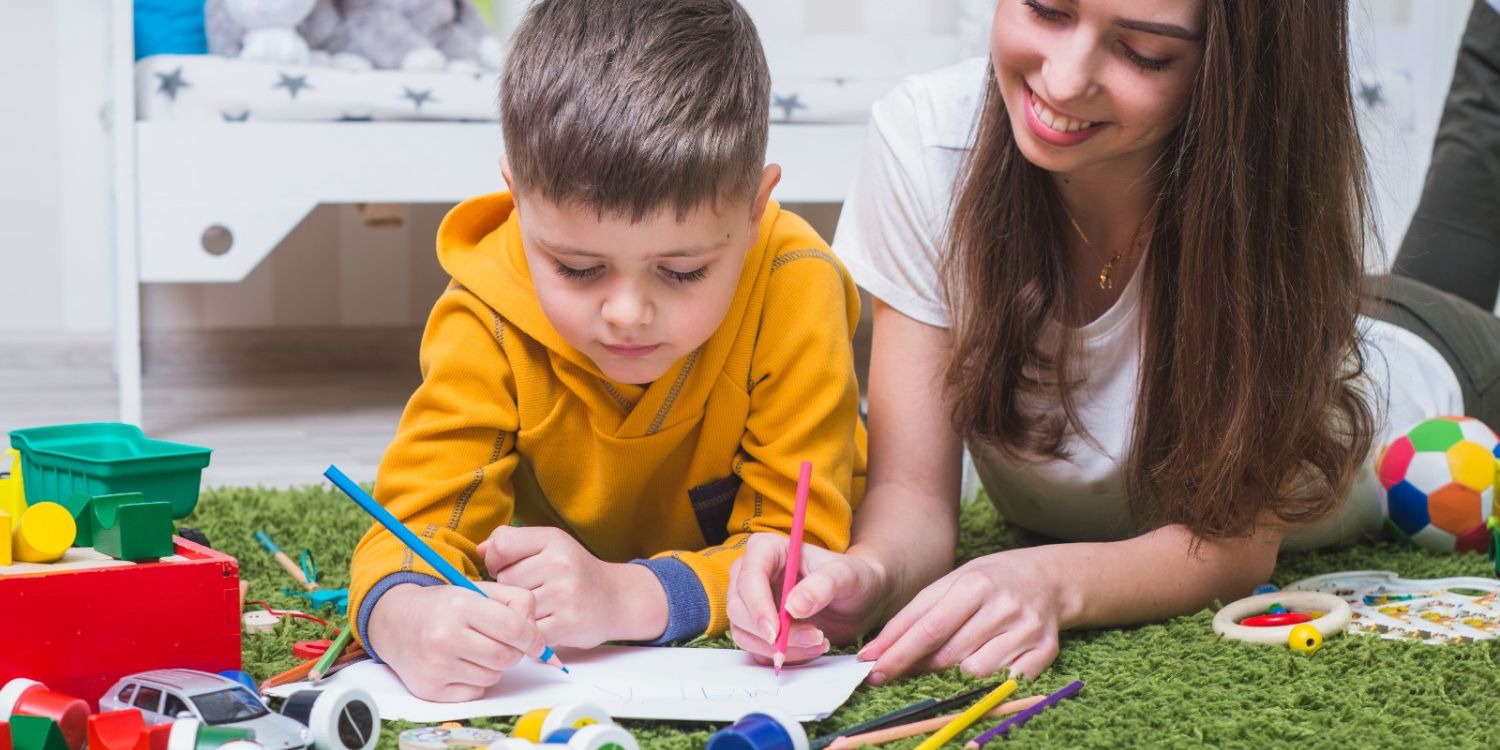
When children squeeze clay or dough, they strengthen the small muscles in their fingers and palms, all essential for holding a pencil later. Activities like stacking blocks, threading beads, or pouring water improve hand-eye coordination and bilateral coordination (the ability to use both hands together). Scribbling freely helps children understand control, pressure, and movement, without the fear of “getting it wrong.”
Even seemingly simple actions like crawling, climbing, jumping, or balancing, play a crucial role. These accumulated motor activities help develop core strength and posture, which are vital for sitting upright and writing comfortably for longer periods. Without these foundations, handwriting becomes physically exhausting and frustrating.
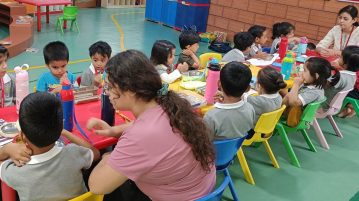
Preschool environments are carefully designed to build these skills naturally. Every splash in a puddle, every messy art project, every free scribble is silently training a child’s muscles and mind for the moment a pencil finally feels natural in their hand.
The Cost of Rushing Childhood
The impact of unrealistic expectations goes far beyond poor handwriting. A child has no control over their emotions and any negative aspects can have them repulsive towards doing it again.
Toddlers thrive on curiosity and joy.When the joy of learning is replaced with pressure to do it right, constant comparison, and a visible display of irritation, children can experience anxiety, self-doubt, and resistance.A child who is constantly told they are “not doing enough” may begin to associate learning with fear rather than excitement.
Over time, this pressure can directly lead to children disliking writing, trying to avoid creative expression, or even resist school altogether. What should have been a beautiful, empowering milestone ends up becoming a source of stress. On the virtue of preparing your child for the future, you, as a parent, are at risk of robbing them of the joy of the present.Writing is not merely a mechanical skill, it is an expression of thought, imagination, and confidence. And confidence cannot be forced; it must be nurtured.
What Parents Can Do Instead
Parents play a powerful role in supporting healthy development often without realising it.
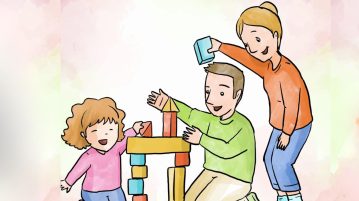
Instead of pushing worksheets and early writing drills, encourage play-based activities at home. Let children tear paper, build towers, draw without instructions, help in the kitchen by stirring or kneading dough, or play with sand and water.
Celebrate effort rather than outcome. Praise curiosity, persistence, and creativity, not neatness or perfection.Allow children to explore at their own pace, and resist comparisons with other children. Development is not a race, and every child reaches milestones differently.Most importantly, create a pressure-free environment. Let learning feel safe, joyful, and voluntary. Children who feel emotionally secure are far more likely to explore, try, fail, and try again. So the next time your new carpet is scribbled with a new shade of blue, just remember your child feels safe around you and when you make it a practice to encourage them to scribble on papers, your furniture may be saved the next time.
Why Preschool Truly Matters
In Preschool, your child doesn’t skip learning, they start it the right way. Beyond preparing them to be primary school ready, preschools play a critical role in social and emotional development. In these spaces, children learn empathy, cooperation, patience, and emotional expression. They learn how to share, how to wait, how to care for others, and how to express their feelings with words instead of frustration. Being surrounded by compassionate teachers and friendly, active peers, gives your child a sense of belonging. This builds confidence, independence, and resilience, qualities that matter far more in the long run than early handwriting.
In a nurturing preschool environment, children are allowed to grow without fear of failure. They learn that mistakes are part of learning, that creativity is valued, and that they are capable just as they are.The path to perfect handwriting begins with muddy fingers, paint-splattered uniforms, and joyful play.Let kids be kids. Let them climb, explore, imagine, and discover. When the time is right, writing will follow naturally, confidently, and happily.Because childhood is not a rehearsal for life.
It is life itself.