
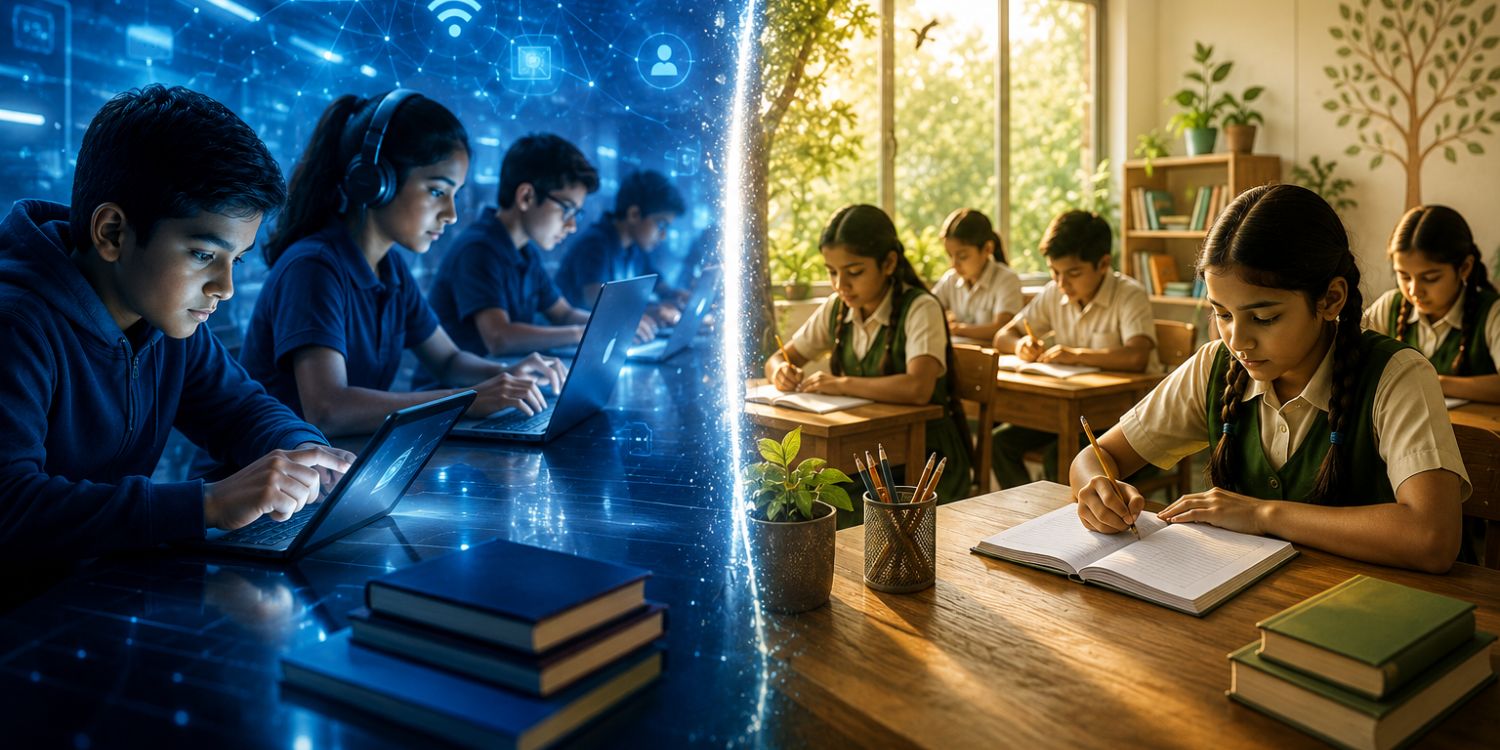
Across the globe, education faces a confusing dynamic: schools are expected to prepare students for a digital-first economy while simultaneously shielding them from the documented harms of screen addiction and constant distraction.
This is the Screen-Time Paradox. On one side, governments and UNESCO advocate for strict smartphone bans to protect youth mental health and improve academic focus. On the other, top international schools and forward-thinking educators recognize that digital literacy, including AI fluency, data privacy, and ethical technology use, is a non-negotiable life skill.
The solution is not choosing between tech saturation and tech total bans. Instead, modern school leaders are developing clear, nuanced frameworks that balance digital safety with essential learning.
Moving Past Binary Thinking
For years, the debate was stuck in extremes: total technology integration versus total digital removal. Today’s most effective educational environments are taking a more deliberate path:
- Banning Personal Distractions: Personal smartphones, smartwatches, and unrestricted social media access are increasingly banned from classrooms and corridors to eliminate notifications, reduce cyberbullying, and promote real-world social interaction.
- Curating Purpose-Driven Tech: Laptops, tablets, and interactive tools remain vital, but their use is tied directly to specific educational goals rather than general entertainment or passive consumption.
The Three Pillars of a Balanced Strategy
Leading international schools and UK multi-academy trusts are using three core principles to handle this transition:
- Intensional Environment Design: Classrooms are designed around clear physical boundaries. Charging lockers keep smartphones out of sight, while collaborative workspaces encourage face-to-face problem-solving.
- Focus on Digital Agency over Digital Habits: Rather than simply monitoring screen time, schools teach students why algorithms catch their attention, how notifications disrupt deep thought, and when to step away from screens.
- Protecting Deep Work: Schools set aside dedicated “unplugged” time for reading, handwriting, hands-on science labs, and outdoor activities, rebuilding student attention spans without sacrificing modern tech tools.
The Path Forward
Technology is an incredible amplifier for education, but it makes a poor substitute for genuine human connection and deep focus. As international education moves through 2026, the institutions leading the way aren’t those with the newest devices or the strictest bans. The real leaders are those creating intentional environments where digital tools serve clear learning goals, and where young people learn to master technology rather than let it master them.