
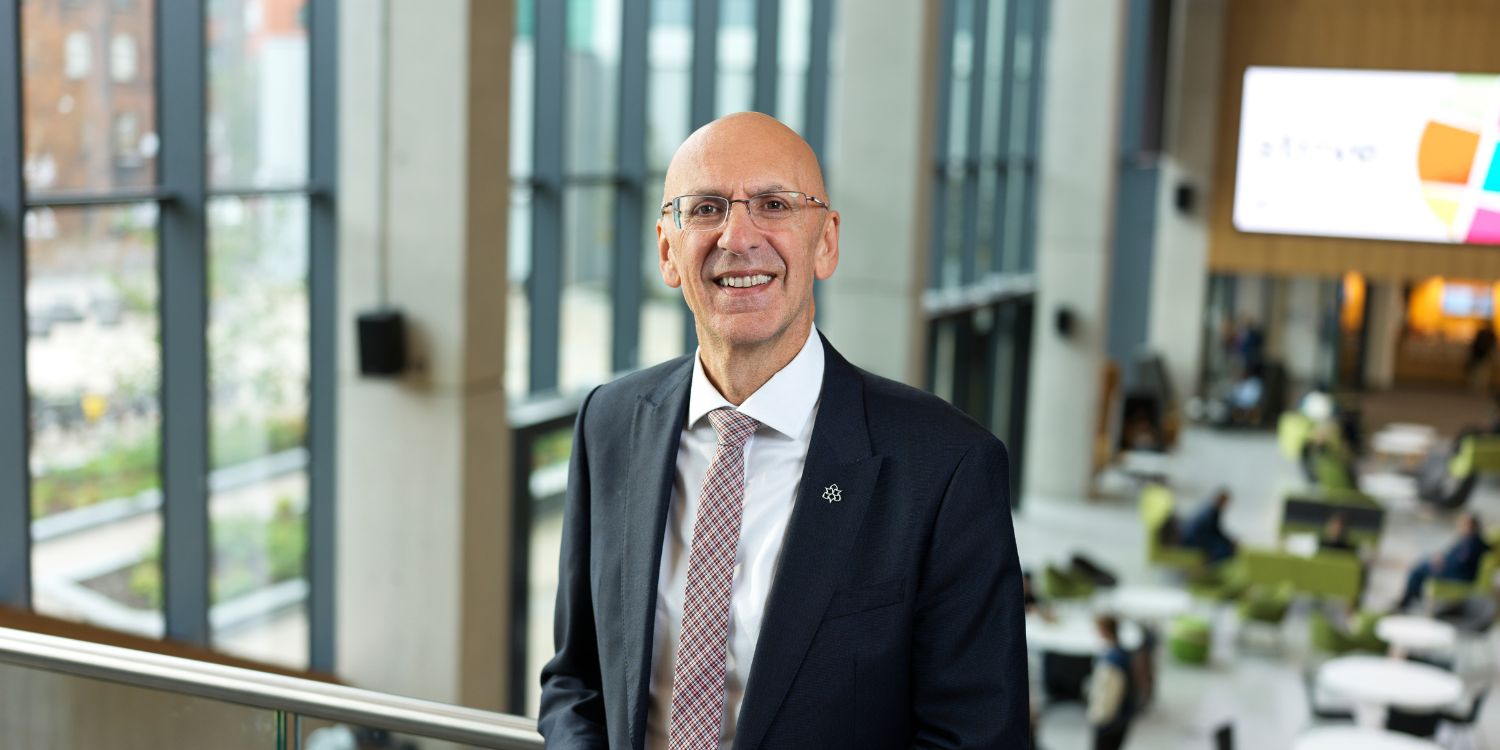
Just as an ecologist views a forest as a complex ecosystem, Professor Malcolm Press CBE DL views higher education as a vital sector that demands balance, sustainability, and diversity to thrive. Today, as he stands at the helm of Universities UK and Manchester Metropolitan University, he applies the same scientific rigor to the educational landscape that he applies to his research. By bridging the gap between high-level discovery, and academic and technical education, Professor Press has become a successful architect of the modern university, one that is resilient, inclusive, and deeply rooted in its community.
The Ecologist’s Blueprint
The trajectory of Professor Malcolm Press’s career was not sparked by a single epiphany, but rather by the cumulative influence of mentors who translated the complexity of the natural world into coherent, intellectual energy.
His philosophy on the modern university was further refined through his tenures at the Universities of Manchester, Sheffield, and Birmingham. In these high-ambition environments, he began to look beyond individual disciplines to the living nature of the institutions themselves. He became fascinated by the mechanics of institutional evolution.
Ultimately, his move into executive leadership was catalyzed by the encouragement of peers who recognized his ability to lead teams and drive success. This external validation, paired with a deep-seated sense of purpose, transformed a world-class researcher into a strategic education leader.
Strategic Homecoming
When asked what drew him back to the Northwest in 2015, Professor Press highlights a rare alignment between Manchester Metropolitan University’s scale and its soul. Having previously navigated the city’s academic corridors as both a student and a faculty member, he was already intimately familiar with the region’s kinetic energy.
Upon his arrival, Professor Press recognized an institution poised for a significant leap in stature. His priority was to instill a renewed sense of institutional confidence by sharpening the University’s strategic focus. He sought to move beyond generalities, identifying the specific arenas where Manchester Met could truly dominate. “I saw a real opportunity to be clearer about where we could genuinely excel,” he reflects.
Central to this transformation has been the distinct character of the city itself. Professor Press views Manchester not merely as a backdrop, but as a primary collaborator. He describes the city as one that instinctively works in partnership, an environment that allows a forward-thinking university to carve out a distinctive and influential niche on the global stage.
Leadership in Action
For Professor Press, leadership is a natural extension of the science of ecology, an exercise in understanding complex systems, recognizing deep-seated patterns, and maintaining a steady hand amidst uncertainty. Thus, as the Vice-Chancellor, the daily reality for Professor Press is defined by a constant, high-stakes versatility. He alternates his busy schedule between high-level external advocacy, and the deep work of long-term strategic planning. The challenge, he observes, is maintaining clarity and consistency of purpose across all of that activity. To navigate this, he draws on a diverse reservoir of experience from his non-executive roles at prestigious organizations like Kew Gardens, the World Wildlife Fund, and the British Council.
Reflecting on his decade-long tenure, Professor Press views his most vital contribution not as a single project, but as the fundamental hardening of the university’s institutional spine. Under his watch, Manchester Met has undergone a profound internal settling, emerging with a sharper academic focus and a heightened sense of self-assuredness. This newfound institutional confidence is anchored by tangible results, characterized by a sharp upward trajectory in research (grants and publications), teaching excellence, and financial performance.
The Road Ahead
Looking toward the horizon, the VC is focused on cementing a legacy of institutional maturity for Manchester Met. His ambition for the coming years is to maintain a university that is academically fearless, unwavering in its identity, and seamlessly integrated into the global community. He views the current era not as a period of disruption to be survived, but as a fertile landscape for reinvention. And in this very pursuit, the path forward is defined by a commitment to a distinctive contribution with quality at its core.
The Sustainable Leader
In a role that demands constant visibility, Professor Press has cultivated a personal routine rooted in longevity rather than just balance. He has moved away from the traditional concept of work-life equilibrium, opting instead for a framework of sustainability and perspective. Recognizing that leadership at this level can easily become all-consuming, he is deliberate about protecting the mental margins required for high-level performance. “Leadership roles can become all-consuming if you allow them to”, he notes, “so it’s important to create space to think, reflect, and maintain a sense of proportion.” For Professor Press, the hallmark of effective leadership isn’t found in the frantic pace of a back-to-back schedule, but in the quiet moments of reflection.
To conclude, we asked Professor Press, a figure with formidable experience spanning research, teaching, leadership and governance, to share a message for the next generation of scholars and leaders. His advice is rooted in the same humility and collaboration that defined his own rise. He urges emerging academics to view their growth as a continuous investment, emphasizing that one must learn as much from their own inevitable mistakes as they do from their peers.
“I have always benefited from being surrounded by outstanding colleagues; building networks and alliances has proved to be invaluable,” he reflects. In what is undoubtedly one of the most challenging periods for global higher education, his parting wisdom is simple yet profound: to surround yourself with people who are talented, inspiring, and able to deliver.
