
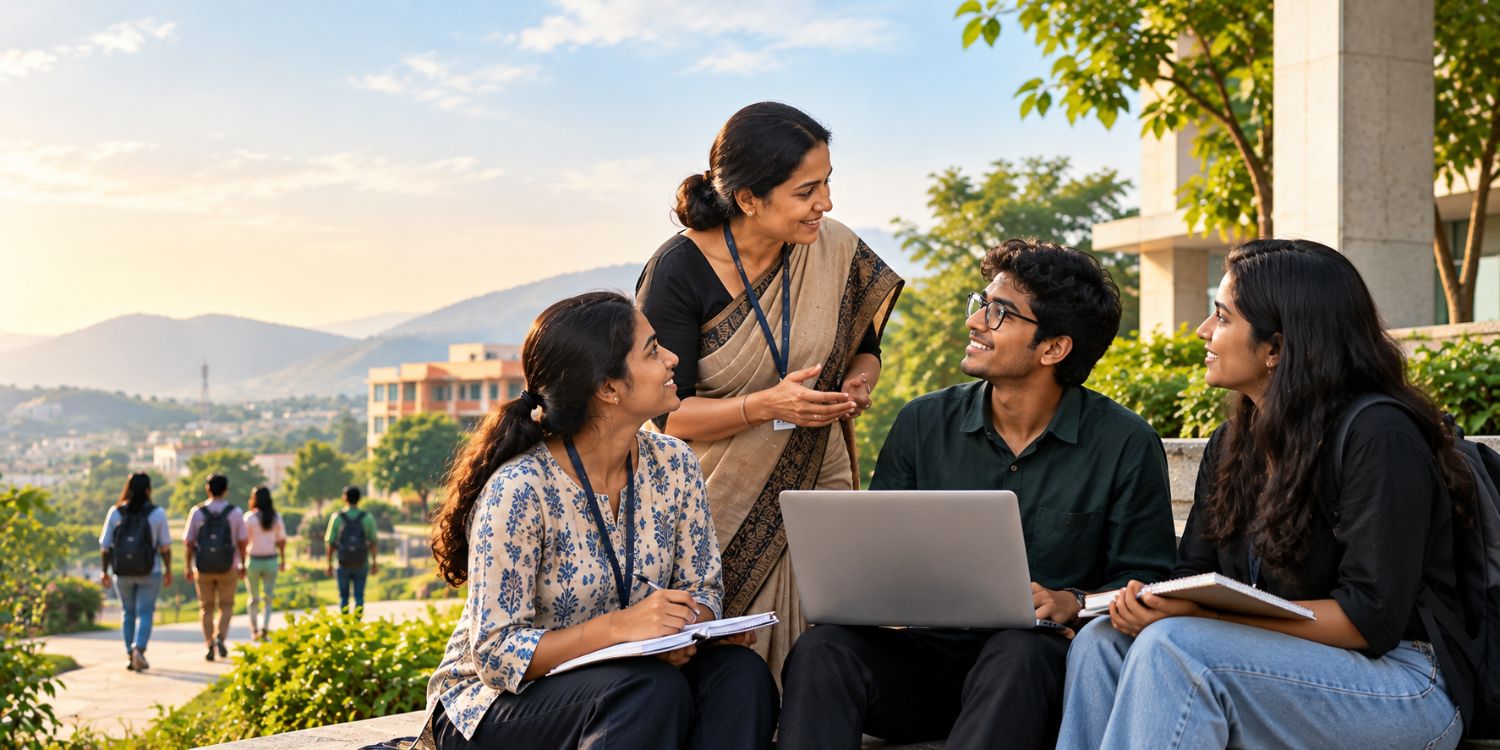
Ask most people to name India’s best colleges, and the list rarely leaves Delhi, Mumbai, Bengaluru, or Pune. That reflex is increasingly out of date. According to the All India Survey on Higher Education, India’s higher-education enrolment has crossed 4.33 crore students, and much of the sector’s next growth wave is coming not from the metros, but from cities like Coimbatore, Gandhinagar, Jaipur, Indore, Bhubaneswar, and Chandigarh. Students who once automatically gravitated toward the big four are now choosing these cities deliberately, drawn by affordability, strong placements, and future-ready programmes.
Why this belongs in this issue
Every leadership quality this issue has celebrated, industry linkage, research culture, employability focus, student wellbeing, is harder to build with a fraction of the funding, faculty pool, and media attention that metro institutions take for granted. That’s precisely what makes leadership in Tier 2 and Tier 3 institutions worth a closer look. A principal in a Tier 1 city building an AI lab has corporate India’s attention and a queue of willing partners. A principal doing the same in a smaller city is often building the case for why that partnership should exist at all, city by city, meeting by meeting.
Institutions in these emerging corridors are seeing genuinely different results. Directors at places like IIT Gandhinagar report rising interest from students in interdisciplinary learning, research, and emerging sectors such as semiconductors and advanced electronics, drawing applicants from Tier 2 and Tier 3 backgrounds who once would have looked only toward Delhi or Mumbai. Vice-chancellors in Coimbatore describe students actively prioritising outcomes over pedigree, choosing programmes for what they can do rather than for the city on the degree.
The leadership difference
This shift isn’t accidental. It’s the product of leaders who read regional economic change early and built for it, rather than waiting for the metro playbook to trickle down. Cities like Pune have grown into manufacturing and mobility hubs, Ahmedabad into pharma and advanced materials, Bhubaneswar and Kochi into education, IT, and fintech corridors of their own. Institutions that anchored their curricula to these local economies, rather than generic national trends, are now producing graduates who don’t need to relocate to a metro to find relevant, well-paying work.
Hiring data backs this up. Tier 2 cities now account for roughly a third of all planned hiring nationally, closing in fast on Tier 1’s share, while Tier 3-plus cities are seeing surging activity of their own. That means the employability question this issue has returned to repeatedly isn’t just a metro problem with metro solutions. It’s increasingly being solved in the cities employers are now actively hiring from.
The takeaway
None of the ten principals featured in this issue lead from obscurity, but their example matters most where visibility is thinnest. The real test of India’s higher-education leadership over the next decade won’t be measured only in Delhi or Bengaluru. It will be measured in whether a principal in Indore, Coimbatore, or Bhubaneswar can build something just as rigorous, with a fraction of the spotlight.