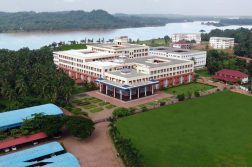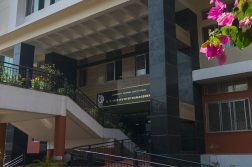

The journey of Kochi Business School is a testament to how visionary leadership can transform the landscape of management education. Progressing with the same strategic foresight that propelled its partner institution – LEAD College of Management to national acclaim, KBS operates under the insightful mentorship of Dr. Thomas George K. And, since its inception in 2012, the b-school has evolved from a nascent MBA program into a respected center of excellence.
The institute’s trajectory has been defined by deliberate, high-impact milestones that bridge the gap between classroom theory and global practice. Beyond these measurable successes, KBS has consistently climbed the ladder in various respected private rankings, earning both deep-rooted local trust and widespread national recognition as a premier management destination. Today, the true measure of KBS’s success is reflected in the professional trajectories of its alumni, who have made their mark as industry-ready leaders commanding significant respect across the corporate landscape.
The Competitive Edge
Kochi Business School delivers an AICTE-approved MBA program designed to meet the rigorous demands of the modern economy through specializations in Business Analytics, Operations, Finance, Marketing, and Human Resources. At the helm of its academic operations is Principal Dr. Bindhu Ann Thomas, a distinguished educationalist and trainer with nearly two decades of expertise. Her scholarly portfolio is supported by a D.Litt. and Ph.D., alongside advanced certifications from premier global institutions such as Harvard University and the University of British Columbia.
KBS’s strategic direction is shaped by a high-powered Advisory Board. Under the guidance of Chief Mentor Dr. Thomas George, this board comprises a diverse group of luminaries, including senior leadership from TCS, Pentad Securities, and Synthite Industries, alongside specialists in law, startups, and HR management from firms like Symega Food Ingredients. These experts meet periodically to recalibrate the curriculum and teaching methodologies, ensuring students are mentored by practitioners who understand the latest industrial shifts.
Complementing the prescribed curriculum, KBS integrates a suite of Add-on courses tailored to enhance employability. Students gain niche competencies through certifications in Digital Marketing, NISM, Industrial Law, and Lean Manufacturing, as well as specialized training in Supply Chain & Logistics. These offerings are further strengthened by active collaborations with prestigious industry bodies such as the Confederation of Indian Industry (CII), G-tech, and the Logistics Sector Skill Council.
Student-Led, Corporate-Driven
The educational experience at Kochi Business School is characterized by an active, multi-channel engagement with the corporate world. Through deep-rooted collaborations with elite professional bodies including the CII, NIPM, ISTD, and the Kerala Management Association (KMA), students are granted a front-row seat to the latest shifts in the global business environment. This connectivity is further amplified through strategic partnerships with industry giants like Synthite, Symega, and Agappe, as well as media houses like Malayala Manorama. By lending faculty expertise and student support to these organizations, KBS creates a reciprocal ecosystem where learning happens in real-time.
KBS also regularly hosts employability tests and high-level corporate events on-site. This direct access to industry executives allows candidates to build professional rapport and gain firsthand insights into corporate expectations long before they enter the job market.
The hallmark of the KBS experience is its student-driven culture, exemplified by flagship initiatives like Maktrix and Kombatts. While Maktrix serves as a multidisciplinary entrepreneurial platform to nurture creativity and logical reasoning, Kombatts represents a masterclass in operational management. This massive annual event, which draws over 500 participants from various institutions and features a prize pool of ₹3 lakhs, is entirely conceptualized and executed by KBS student committees.
A Culture of Excellence
The faculty at Kochi Business School is distinguished not only by high academic qualifications but also by a profound blend of industrial expertise and international exposure. This culture of excellence extends throughout the teaching staff, many of whom serve as visiting faculty at various IIMs and contribute regularly to ABDC ‘A’ category publications.
KBS maintains a proactive stance on faculty development, viewing it as a cornerstone of student success. Educators are regularly deputed to national and international conferences, with recent participations including a high-level Faculty Development Program (FDP) at the Wharton School of Business. To sustain this momentum, the institution has implemented robust incentive schemes that encourage participation in both academic and co-curricular skill-building. These professional growth initiatives are often conducted in immersive environments, such as specialized training retreats in Munnar.
Furthermore, the b-school employs a scientific approach to maintaining teaching standards through a unique internal ecosystem. Weekly Think Tank meetings facilitate a collaborative knowledge-sharing culture, where faculty members exchange insights to refine their instructional delivery. This is complemented by a rigorous feedback loop, where student inputs are systematically analyzed to drive continuous improvement.
The Turning Point
At Kochi Business School, the journey toward professional excellence is fueled by a rigorous, 360-degree training ecosystem. The institution goes beyond traditional academics to offer thousands of hours of specialized skill development, including the transformative Turning Point program, a curated high-intensity, six-day residency spanning 15 hours a day designed to build the mental flexibility and endurance required for corporate leadership. This is further enhanced by Neuro-Linguistic Programming (NLP) sessions aimed at unleashing individual potential, alongside dedicated communication training led by external experts like Mr. Prem Abraham. To ensure a well-rounded personality, students participate in Outbound Training (OBT) in the Western Ghats, where nature serves as a backdrop for developing teamwork and resilience.
The transition from the classroom to corporate is anchored by a highly active placement cell, mentored by a distinguished panel of trainers including Dr. Thomas George, Dr. Bindhu Ann Thomas, and Ms. Muthumani, who serves as the Professor of Practice. Students gain early professional exposure through paid internships starting in their second semester, all of which are closely monitored by faculty mentors. This practical foundation, combined with a powerful global alumni network, has resulted in a consistent upward trend in placement statistics. From the 2020 batch through 2022, the institution has seen a steady rise in CTC packages, with graduates successfully securing enviable positions in leading firms across India and abroad. The placement cell maintains a proactive relationship with potential employers, ensuring that the curriculum evolves in parallel with global hiring trends.
Road Ahead
When discussing the roadmap ahead, Dr. Bindhu Ann Thomas, Principal of KBS, envisions a trajectory that transcends national boundaries. The institution is currently in the advanced stages of pursuing International Accreditation and Autonomous Status.
“Our vision is to stand among the preeminent B-Schools in India, not just in rankings, but as a primary engine for economic and societal development,” Dr. Thomas notes. She emphasizes that the core of their strategy is continuous pursuit of academic and professional excellence. By fostering an environment where the “best of the best” global corporations look to KBS as their first choice for talent, the school ensures its graduates are positioned at the very top of the corporate hierarchy.
Looking toward the 2026-2027 academic cycle and beyond, KBS is dedicated to refining its inclusive and experiential model. Dr. Thomas concludes that the institution’s ultimate goal remains clear – “To contribute to the development of the economy and society as a whole by empowering students with an education that is both ethically grounded and globally competitive.”