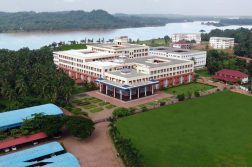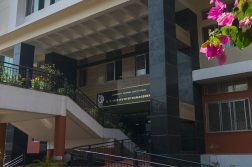

In an era when management education was still taking root in Eastern India, visionary leaders like Prof. (Dr.) Prabir Pal founded Regional College of Management (RCM) in Bhubaneswar in 1982, with just 32 students in a modest rented building. As Odisha’s first techno-management institute, RCM emerged amid significant challenges, yet it courageously met the growing demand for skilled professionals as the state’s industrialization gathered momentum.
Fast-forward to today – RCM stands as a formidable powerhouse, boasting over 17,000+ alumni, triple accreditation from NAAC, NBA, and ACBSP (USA), and international recognition from CHEA (USA), and earning widespread recognition for its sustained excellence. “We stepped into the world of education way back in 1982 and since inception, RCM has been continuously evolving its strategy to respond to the contemporary business needs and social changes,” notes Prof. (Dr.) Prabir Pal, Chairman of the B-School.
Renowned for its focus on bold innovation, critical thinking, and passion-driven learning, Regional College of Management, Bhubaneswar, is being honored at the Education Excellence Awards & Summit 2025. And the title of Distinguished B-School of the Year 2025 – Academic Innovation is a well-deserved one, for rightly and seamlessly bridging Odisha’s rich cultural roots with the demands of modern global business.
Ready for Reform
Regional College of Management, Bhubaneswar achieved a landmark distinction as the first management institute in Eastern India to receive UGC conferment in 2009, solidifying its autonomous stature under sections 2(f) and 12(b) of the UGC Act. The b-school pioneered the structural fusion of core business principles with computing and technology disciplines across India, while status as a benchmark institute was further cemented by becoming the first institute to introduce advanced industry platforms, such as Salesforce, Microsoft 365, and Zoho.
When India’s economy underwent sweeping liberalization in 1991, reshaping industries and opening new frontiers, RCM had already been shaping talent for nearly a decade. This head start meant that many of the early professionals steering Odisha through its post-reform industrial surge and economic resurgence carried RCM credentials, contributing significantly to the state’s evolving corporate ecosystem.
Over the decades, the college’s teaching approach has evolved deliberately and methodically. It began with traditional lecture-based instruction in its formative phase, shifted toward incorporating case studies during the 1990s for deeper analytical engagement, and now embraces the Collaboration-Effective Learning (CEL) framework. Today’s curriculum reflects this progressive ethos, encompassing specialized domains such as Business Analytics, FinTech, Cybersecurity, Data Science, Cloud Computing, and Full Stack Development.
Complementing this strong academic backbone, RCM delivers a versatile lineup of forward-thinking programs that fuse rigorous theory with experiential learning and well-rounded personal growth. These offerings include the BBA+, BCA+, MBA+, MCA+, and PGDM+. Additionally, RCM is the first institute in Eastern India to introduce the distinctive MATA, a specialized master’s degree in tourism administration designed to equip graduates to navigate this vibrant, multifaceted sector.
From Patents to Pedagogy
The caliber of faculty who impart these varied courses is top notch and they form the bedrock of Regional College of Management, Bhubaneswar. Sustaining a dedicated team of more than 60 senior educators, achieving a student-to-faculty ratio of 16:1 and even a 9:1 followed in some offerings, a clear benchmark is set that surpasses typical national standards.
A standout marker of the faculty’s innovative spirit is their record of over 53 patents, a noteworthy accomplishment for any management-focused institution, and particularly impressive within Eastern India’s B-school landscape. Also, to keep pace with the relentless evolution of knowledge domains and teaching methodologies, RCM has instituted its own Training of Trainers (TOT) Reading Programme, which is a proactive, in-house mechanism for lifelong faculty renewal.
In the context of NEP 2020’s emphasis on outcome-oriented learning, interdisciplinary approaches, and tighter industry-academia linkages have become a norm, only resulting in the boosting of RCM’s embedded culture of continuous professional growth.
Road to Excellence
In an age where many institutions struggle to provide meaningful career support amid fierce job market competition, RCM has made industry integration a foundational pillar of its educational design. Rather than treating corporate exposure as an add-on, the college embeds it architecturally throughout the academic calendar through its Corporate Immersion Framework.
At the heart of this approach lies the Collaboration-Effective Learning (CEL) initiative, which requires every participant in MBA, MCA, and BCA streams to tackle authentic corporate challenges as evaluated coursework components.
The Summer Internship Programme further strengthens this bridge, assigning each intern dual guidance – a faculty mentor focused on aligning outcomes with academic goals and an industry supervisor assessing real-time performance.
Also, through the various MoUs signed over the years with top corporations, RCM welcomes senior executives to contribute directly as curriculum partners via dedicated Company Programs and Management Development Programs (MDPs). Far from mere guest lectures, their involvement ties precisely to syllabus objectives, enriching conceptual depth with current industry perspectives without overshadowing core academics.
Preparation for the professional world intensifies through the Road to Excellence series, offering targeted coaching in aptitude assessments, group discussions, and simulated interviews. This immersion strategy has earned strong market validation.
The crowning achievement of this robust ecosystem came in the 2024–25 recruitment cycle, where RCM partnered with more than 830 companies, while securing a remarkable 98% placement success rate and a peak offer of 23.7 LPA. Prominent recruiters included Deloitte, L&T, Axis Bank, American Express, Genpact, Tech Mahindra, Piramal, Muthoot Finance, ITC, Tata Steel, Wipro, HCL, HSBC, ICICI Bank, SBI, Godrej, Reliance, Bata, Asian Paints, Nestle, Coca-Cola, and Dr. Reddy’s Laboratories, alongside many others in finance, consulting, IT, manufacturing, and FMCG.
Cultivating the Next Generation of Visionary Leaders
To bring this journey full circle, from Odisha’s pioneering management institute in 1982 to its current stature as a nationally recognized powerhouse, we posed a pivotal question to Dr. Pritam Pal, the Director. We asked him to shed light on the initiatives RCM has in place to foster entrepreneurship, leadership, and innovation among students.
Dr. Pritam Pal reflects that entrepreneurship and leadership are not confined to isolated modules or electives at RCM, but form the very philosophical core that has defined the institution. “From the beginning, we operated with a clear purpose to cultivate decision-makers capable of guiding enterprises through uncertainty, ambiguity, and incomplete information, which is the very essence of entrepreneurial leadership,” he explains.
Central to this vision is the Decision Making Orientation (DMO) framework, which infuses the entire curriculum with rigorous exposure to high-stakes scenarios. And, students grapple with information asymmetry, time constraints, and conflicting interests through embedded case analyses, and not as an optional add-on.
The college also maintains an Ethics and Spiritual Training Centre, acknowledging that enduring leadership, whether in corporate, governmental, or social ventures demands more than analytical tools. RCM Bhubaneshwar is also home to -Student-led governance bodies, including the Grievance Cell, Anti-Ragging Committee, and Internal Complaints Committee, transcend regulatory requirements. These platforms empower elected representatives to practice institutional citizenship.
As a techno-management hotspot, the campus hosts varied cultural extravaganzas, most notably Brahmastra. Recognized as one of India’s most immersive collegiate battlegrounds, Brahmastra 2026 brought together over 10,000 participants across 200+ events, featuring Brahmotsav cultural battles, Kurukshetra sports arenas, and Chakravyuh business strategy rounds. This massive exposure is further expanded by Ashwamedha, a Global Management Conclave. Started as a collaborative academic–industry initiative, Ashwamedha moves beyond traditional conferences to foster meaningful engagement, mentorship, and dialogue.
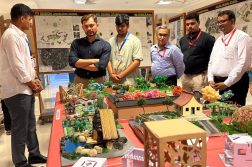
Where India’s Department for Promotion of Industry and Internal Trade (DPIIT) recognized startups surpass 1.40 lakh (as of recent counts) and Odisha’s Bhubaneswar-centered tech corridor gains momentum, RCM’s commitment to building an entrepreneurial mindset stands as a strategic asset. Recent campus highlights, from the Entrepreneurship Awareness Drive 2025 (in partnership with IIT Kharagpur’s E-Cell) to the landmark AA KA MA 2025 expo, which is India’s largest student entrepreneurship event igniting innovation while bridging tradition with forward-thinking empowerment.
All in all, Dr. Pal concludes, “We work hard to prepare every student for their professional life, not just to succeed in jobs, but to create value, lead change, and build ventures that endure.”