
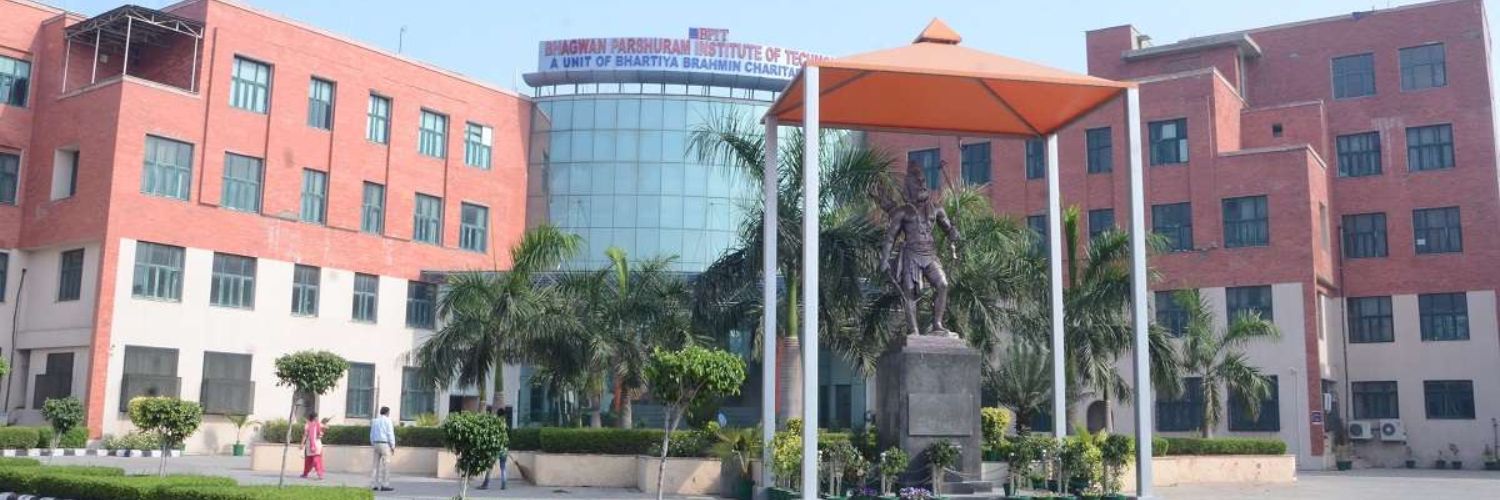
The story of the Bhagwan Parshuram Institute of Technology (BPIT) is not just one of academic growth, but of a legacy rooted in providing value-based education. Established in 2007 by the Bhartiya Brahmin Charitable Trust (BBCT), the institute was born from a singular mission of forging a generation of technocrats and leaders who are unique and socially conscious.
At the heart of this journey was the late Shri Atam Prakash Kaushik Ji, the founder Chairman and former President of BBCT. A firm believer in the philosophy that “Great men are not born great, they grow great,” Shri Kaushik Ji was the architect of BPIT’s success. Since the institution first opened its doors with four B.Tech branches and an MBA program, his dynamic leadership implemented the qualitative and quantitative changes that defined its early years.
Today, BPIT stands as a testament to his immortal vision. Under his guidance, the institute didn’t just provide high-quality education, but created an environment where technical expertise and human values coexist.
As we feature BPIT as a Top Educational Institution in Delhi NCR 2026, we pay homage to Shri Kaushik Ji’s ideals.
A Tradition of Quality
Under the leadership of Shri Vinod Vats, who serves as both the Chairman of the institute and President of BBCT, BPIT has solidified its standing. Affiliated with Guru Gobind Singh Indraprastha University (GGSIPU), the college holds the prestigious ‘A’ grade, the peak designation granted by the university to its partner institutions.
The college’s commitment to rigorous standards is validated by its consistent performance on the national stage. Since securing its initial National Board of Accreditation (NBA) status in 2017, BPIT currently maintains NBA accreditation for its core B.Tech disciplines – CSE, ECE, and EEE.
To remain at the forefront of the digital landscape, the institution prioritizes high-demand domains such as Artificial Intelligence, Machine Learning, and Data Science. By embedding specialized curricula directly into the campus experience and facilitating engagement with global developer communities, the college ensures its graduates possess the precise skills required by a modern workforce. This approach is further supported by a sophisticated educational framework designed to navigate diverse, multi-conceptual environments.
Holistic Campus Experience
Nestled in the prime locality of Rohini, BPIT boasts an expansive and intelligently designed campus that serves as a sanctuary for academic and personal growth. A defining characteristic, one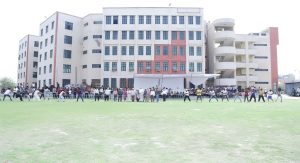 quite rare for a Delhi-based college is the inclusion of a vast playground, offering students the well-needed and vital open space. The site is strategically positioned for effortless transit, located within a 2-kilometer radius of both the Rithala Metro Station (Red Line) and Samaypur Badli Metro Station (Yellow Line), providing a seamless commute that bypasses the city’s typical congestion.
The academic infrastructure is anchored by state-of-the-art laboratories and a sophisticated, computerized library. This knowledge center houses an impressive collection of over 50,000 volumes while granting students access to premier global databases such as DELNET and NDLI. To support a truly modern learning environment, the entire campus is integrated with high-speed, free Wi-Fi.
Beyond technology, the institute is deeply committed to sustainability and inclusivity. The premises are powered by solar energy and feature an advanced rainwater harvesting system. For the comfort of outstation students, the college provides a secure and well-appointed on-campus hostel capable of accommodating 128 female residents.
The Career Launchpad
At the core of Bhagwan Parshuram Institute’s mission is a commitment to ensure graduates are equipped for the demands of the modern workforce. By establishing strategic partnerships and industry-sponsored laboratories directly on campus, the tech institute actively addresses the evolving needs of the professional world. A prominent example is the Samsung Innovation collaboration, a specialized initiative where students undergo dedicated training based on industry-specific syllabi.
BPIT is also known for fostering a culture of experiential learning through high-level off-campus exposures. Recently, students engaged in a cutting-edge drone technology program held at the IIT Delhi Sonipat campus, an initiative that aligns with the Chairman’s vision to establish dedicated on-site research facilities in the emerging areas of technologies.
These robust industrial ties culminate in strong placements – year after year. And specifically for the 2025 academic year, the college achieved a remarkable 80% placement rate, with students securing lucrative offers from premier global corporations. The presence of elite recruiters such as Microsoft, Google, Amazon, Adobe, and Juspay underscores the high caliber of the talent produced here.
Roadmap for the Next Decade
As Bhagwan Parshuram Institute of Technology looks toward the next decade, the roadmap is defined by a blend of physical expansion and intellectual advancement. We spoke with Prof. Payal Pahwa, the Principal of BPIT, regarding the strategic trajectory of the college. She noted that the immediate priority is a transformative enhancement of the campus to match the evolving needs of global industry.
Earlier this year, a significant milestone was reached with the inauguration of a massive new building project. This expansion includes a state-of-the-art administrative block and a world-class auditorium designed to host international seminars and cultural exchanges. “This new infrastructure is more than just brick and mortar,” Prof. Pahwa shared. “It is a dedicated space for the future, housing advanced laboratories focused on Artificial Intelligence and other pioneering technologies that will define the next industrial revolution.”
Lastly, the institute’s long-term mission remains centered on nurturing a culture of self-reliance and creative problem-solving. The college is intensifying its support for student-led startups and entrepreneurial ventures, ensuring that graduates aren’t just job seekers, but job creators.
