Great leadership is often rooted in the soil of humble beginnings. For Padmashree Dr. D.Y. Patil, a personal history in farming, became the seed for a national revolution in education. What began in 1983 as a single engineering college has blossomed into a vast academic ecosystem of 180+ institutions. Today, as D.Y. Patil College of Engineering (DYPCOE) celebrates over four decades of excellence, it stands as a testament to that original visionary spark, now evolved into a future-ready powerhouse. By transitioning from traditional teaching to a complete learner-centric model, DYPCOE isn’t just following the mandate of NEP 2020, but is redefining the engineering landscape for the year 2026 and beyond.
From Foundations to Future-Ready
Rooted in a legacy that began in 1984 in Pimpri, D.Y. Patil College of Engineering underwent a transformative relocation in 2001 to the Akurdi complex. Spanning ten acres, the campus is positioned within the Pimpri Chinchwad Industrial area, one of Asia’s most formidable industrial belts. This geographic advantage is supported by the institution’s affiliation with Savitribai Phule Pune University and approval from AICTE. A significant milestone was reached in the academic year 2024-25, when the college was granted autonomous status.
This newfound independence allows the institute to act as a dynamic bridge between academia and the workforce. By exercising curriculum flexibility, DYPCOE swiftly integrates real-time skill requirements and technological shifts into its academic framework. A cornerstone of this success is the active participation of industry veterans on the Board of Studies (BoS) across every department. These experts ensure that the curriculum is infused with practical case studies and contemporary tools. Beyond technical expertise, the institution also emphasizes interdisciplinary learning and soft-skill development, supported by incubation hubs.
The college further enriches the student experience through a robust ecosystem of internships, live projects, and co-created courses. To remain at the forefront of the digital era, the campus has fully embraced Industry 4.0, integrating AI, Data Science, and IoT into its core. By utilizing advanced ERP systems and virtual simulation platforms, the college ensures that its graduates are not just academically proficient, but are agile professionals.
Curriculum 4.0
At the heart of DYPCOE lies a diverse range of undergraduate programs, meticulously curated to meet the multifaceted needs of modern engineering. The college offers specialized degrees in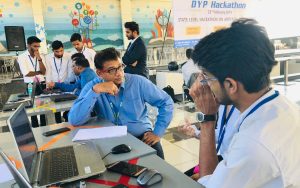 Computer Engineering, Information Technology, Electronics and Telecommunication, and Instrumentation and Control. Furthermore, traditional pillars such as Mechanical and Civil Engineering continue to thrive alongside cutting-edge additions like Robotics and Automation.
Standing at the forefront of this academic portfolio is the flagship B.Tech. program in Artificial Intelligence and Data Science. It offers an immersive journey through Machine Learning, Data Visualization, Deep Learning, and Computer Vision. As Industry 4.0 matures, the curriculum has proactively expanded to include pioneering fields such as Generative AI and Agentic AI.
The pedagogical philosophy here emphasizes the marriage of theory and practice. Every subject is intricately mapped to global case studies, allowing learners to witness the immediate impact of their studies on real-world scenarios. By blending technical training with the mentorship of subject matter experts, the institution fosters an environment where adaptability and problem-solving become second nature.
A Holistic Ecosystem
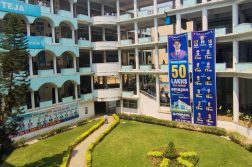
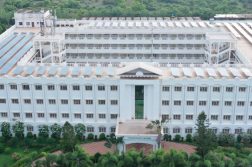
Set within a lush, 32-acre green campus, D.Y. Patil College of Engineering, Akurdi, offers a serene environment that balances technological advancement with environmental tranquility.
The academic core of the campus features 42 ICT-enabled classrooms, coupled with 72 specialized laboratories and 18 Centres of Excellence. These centers, such as those dedicated to PLC Automation and Robotic AI, serve as critical bridges, allowing students to master industry-standard tools and engage in real-world problem-solving.
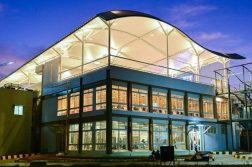
Beyond the laboratory, the institution provides professional platforms for intellectual exchange, including the state-of-the-art Shantai Auditorium and the Dnyanaprasad Sabhagruha conference hall. The library further supports this mission, functioning as a mechanized search system and a quiet zone that houses a vast collection of digital and print resources, including access to NPTEL and international journals.
Student life at the Akurdi campus is equally prioritized through ultramodern residential facilities. The air-conditioned hostels for both boys and girls are designed to be safe, comfortable living spaces that foster a sense of community. This is rounded out by a spacious, hygienic canteen and an extensive sports complex featuring a tennis court, basketball court, and football ground.
Fueling Discovery
Home to strategic alliances with organizations like InTellee IT (Canada) for IoT and Bentley Inc. for Building Information Modelling (BIM), and supported by meaningful MoUs with research organizations, the transition from a classroom concept to a market-ready startup is a viable reality for many at DYPCOE. This exposure results in a strong spirit of inquiry extending into a robust Research and Development framework. As a result, the tech institute actively cultivates a culture of discovery, supported by significant grants from bodies such as AICTE, DST, and ANRF.
Faculty members are encouraged to pursue socially relevant research, frequently contributing to prestigious, SCOPUS-indexed journals. To protect and propel these innovations, a dedicated Patent Cell provides comprehensive mentorship, guiding both students and staff through the intricacies of Intellectual Property Rights (IPR). In addition, the campus remains a hive of activity with frequent hackathons, expert-led workshops, and innovation challenges that push students to prototype and build.
A Roadmap for Excellence
When looking toward the future, Dr. Mrs. P. Malathi, Principal of DYPCOE, outlines a clear and ambitious trajectory for the institution through a comprehensive Perspective Plan. “Our goal is to transcend traditional boundaries by fully aligning our curricula with the National Education Policy and pioneering fields like sustainable engineering and Artificial Intelligence,” Dr. Malathi notes. Under this plan, the college is aggressively expanding its R&D footprint, transforming the campus into a launchpad for patents and high-impact publications while ensuring that every student is equipped with the technical competency and soft skills.
Beyond academic restructuring, the institution is committed to a period of purposeful growth that emphasizes both human and physical infrastructure. This involves the continuous professional development of faculty and the modernization of laboratories through advanced digital integration and new Centres of Excellence. Dr. Malathi emphasizes that by sharpening performance in national benchmarks like NIRF and NAAC, the college is securing its legacy as a top-tier institution. As she summarizes, “We are not just preparing students for their first jobs, we are building a sustainable ecosystem where ideas grow, research carries social relevance, and our graduates emerge as the architects of a future-ready India.”