
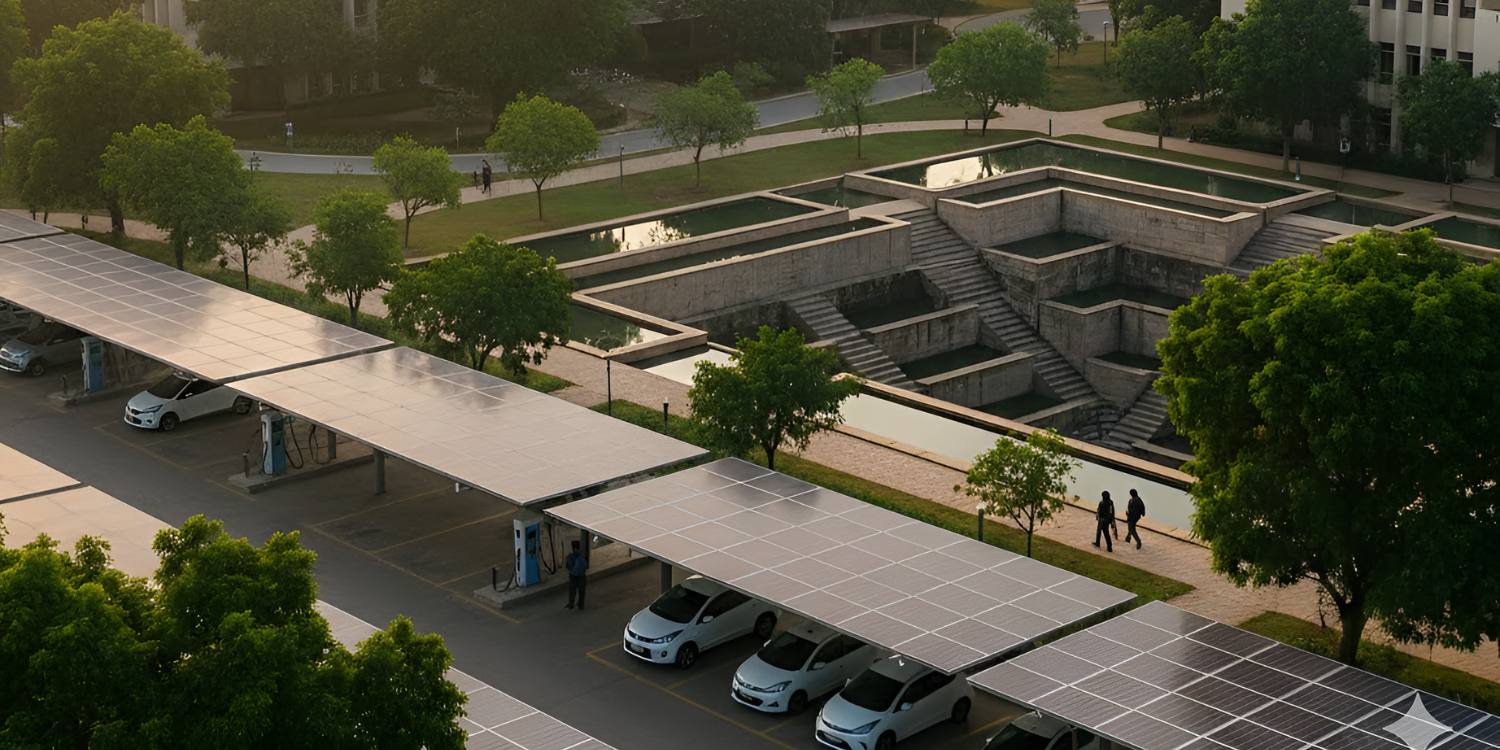
Premier technical institutes now achieve platinum ratings under GRIHA standards through zero sewage discharge systems and solar carports generating up to 500 kWp—meeting nearly half their energy needs. Anaerobic reactors treat wastewater for irrigation, while fly ash bricks and passive cooling minimize heat gain. Northern campuses promote walkability with EV charging stations and CNG shuttles, cutting transport emissions significantly.
Renewable Energy Advances
Public universities lead solar adoption, powering labs and hostels via rooftop panels and real-time IoT monitoring. Western institutes harvest rainwater through step-well-inspired structures, recharging aquifers amid water stress. Biogas plants convert organic waste into energy and compost, supporting zero-waste goals.
Research and Student Labs
Sustainability labs engage students in biodiversity mapping, carbon audits, and rural climate projects. Central universities redesign curricula for climate finance and resilient agriculture, partnering with industries on green hydrogen and EV tech. Mission LiFE drives pro-planet behaviors in energy, waste, and mobility.
Water and Waste Strategies
Eastern HEIs recycle 80% of water via advanced plants for landscaping, complemented by green roofs and permeable pavements. Plastic-free zones and composting units minimize landfill use, with student audits ensuring compliance.
Global Recognition
Over 100 public universities featured in QS Sustainability Rankings 2026, with top IITs climbing to 200+ globally. These efforts address equity gaps, though rural campuses lag in funding.
Public institutions model low-carbon futures, blending operations with hands-on learning for a sustainable India.