
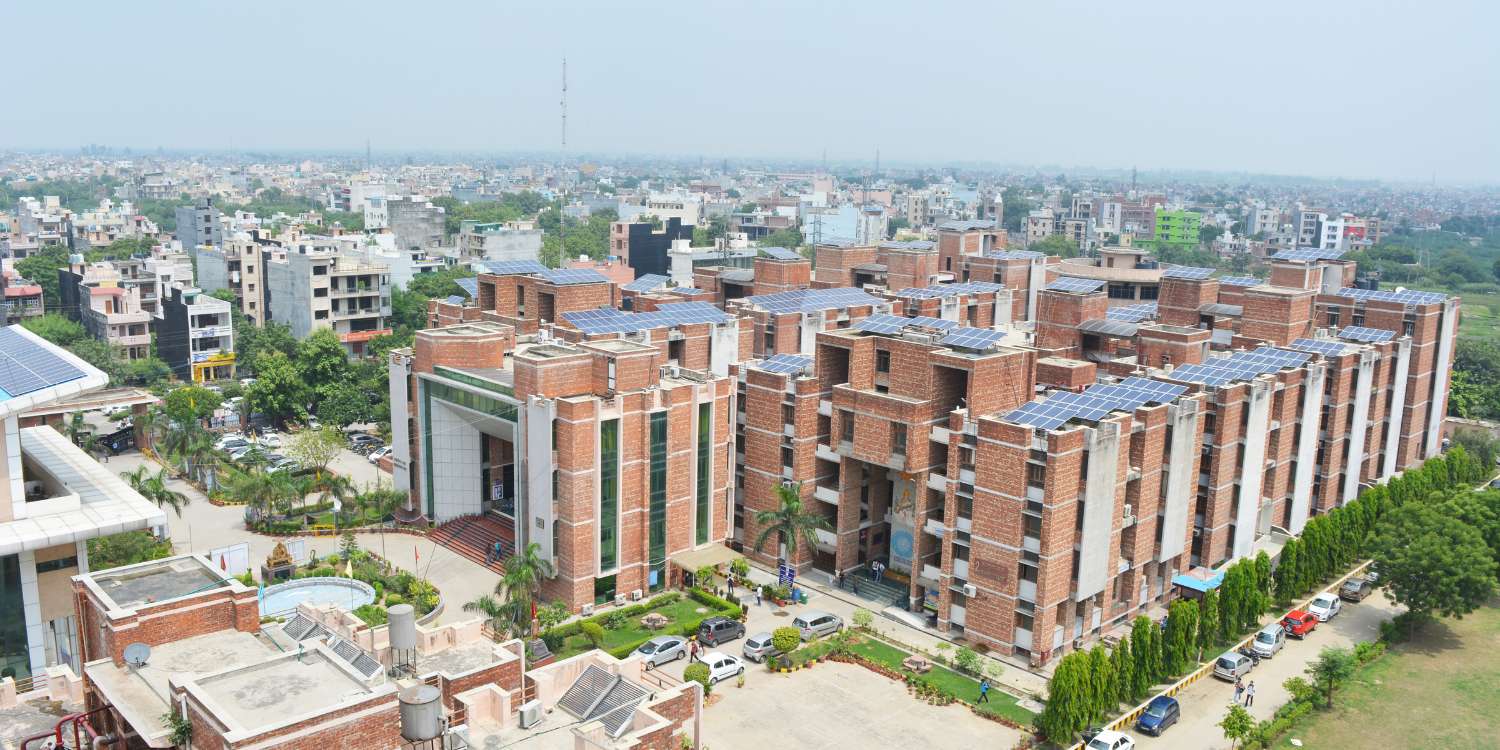
Today, engineering education in India faces a pivotal shift, driven by the explosive growth of AI, machine learning, IoT, robotics, and sustainable technologies amid Industry 4.0 demands. Traditional rote-learning models fall short against industry needs for innovative, adaptable engineers skilled in interdisciplinary problem-solving, hands-on digital tools, and real-world applications like smart manufacturing and green energy.
Institutes like Maharaja Agrasen Institute of Technology (MAIT) embody this future-ready ethos, earning recognition as the Distinguished Engineering College of the Year 2025 for its robust digital ecosystem. Affiliated with GGSIPU and NBA-accredited in key B.Tech programs such as CSE, ECE, IT, ME, and EEE, MAIT bridges academia-industry gaps through cutting-edge labs, updated curricula, and strong placement outcomes, preparing students to lead India’s tech-driven economy.
MAIT In a Nutshell
Founded in 1999 under the aegis of the Maharaja Agrasen Technical Education Society, MAIT was spearheaded by eminent industrialists, business leaders, experts, and philanthropists. A constituent school of the Maharaja Agrasen University, Solan, Himachal Pradesh, the Institute is embedded in a university environment of responsive ambition.
It commenced operations with an inaugural batch of 180 B.Tech learners in CSE, ECE & MAE and now spans 13 engineering branches at the undergraduate level, including recently introduced forward-looking specializations in Artificial Intelligence & Data Science, Artificial Intelligence & Machine Learning, and cutting-edge Computer Science variants.
Home to a state-of-the-art infrastructure, MAIT today houses an Intel Centre of Excellence for Artificial Intelligence, equipped with high-performance clustered computing, dedicated GPUs, Edge AI toolkits from Intel, and tailored industry curricula. Complementing this are the AICTE-backed Idea Lab and IoT Lab for collaborative experimentation and practical advancements, plus a dedicated R&D and Project Lab. Beyond the classroom walls, the MAIT campus cultivates a vibrant ecosystem that nurtures holistic development through cultural immersion, athletic pursuits, civic engagement, creative expression, leadership opportunities, and ethical grounding.
Unlocking Global Doorways
MAIT cultivates robust ties with prominent corporations, research organizations, and peer universities, immersing learners in new-age tools and workplace protocols. Ties with entities like DRDO, Mitutoyo, Daikin India, Ornate Solar, EVM Simply Electric, Libsys Ltd., Coding Blocks, Fujiyama Systems, Mega Group Japan, and GKM Energy unlock pathways for placements, funded studies, on-site training, and shared seminars, while alliances with institutions such as San Francisco State University broaden international horizons and exchange programs.
The curriculum and the syllabus too evolves each day through ongoing corporate inputs, GGSIPU directives, and elective offerings. Experiential education thrives via required placements, site tours, guest lectures, mentor-guided ventures, and partner-endorsed modules like Wipro TalentNext for enterprise coding, CATPAI on generative models and AI ethics, Intel Unnati for deep learning, and Kyndryl’s cybersecurity regimen. Guided by trained in-house faculty members and visiting faculty, the students take on final projects, ventures, and assessments with complete confidence, in turn, turning into professionals equipped for dynamic markets.
From Ideas to Impact
When asked how MAIT strengthens student startups and creativity through incubation centers, funding help, and patent support, Dr. N K Garg, the Founder and Chief Advisor, MATES describes a well-rounded system. “The Tech Institution’s Innovation Council (IIC) and Entrepreneurship Development Cell (EDC) offer expert advice, idea review steps, design thinking tools, and focused business workshops,” he says.
Under the 2021 Innovation & Startup Policy (MISP), students get help with patent filing, basic IP knowledge, early prototype funding, seed money, and investor links, plus IIC events like bootcamps and pitch contests. Dr. Garg notes students use practical facilities, from 3D printers and IoT labs to measurement tools, AC systems, AI computers, robot kits, and project spaces, to build working models. Faculty too plays a major role in this domain, on which he shares – “Our teachers work closely on grant proposals, contest entries, and incubator programs”. Strong IP support for new ideas in AI, energy-saving tech, EV designs, automation, and health tools helps turn innovations into real products, building students who create lasting change, Dr. Garg concludes.
Showcasing Sustainable Visions
 MAIT integrates green principles across its engineering curriculum and daily campus activities. First-year students take Environmental Studies to learn about conservation, pollution prevention, and resource management, while electives and projects cover green computing, smart urban planning, and low-energy designs. The RAC Centre of Excellence, backed by ASHRAE, drives research into eco-friendly coolants, better heat management, hybrid chillers, and solar cooling to cut carbon emissions in air conditioning. The AICTE-supported Additive Manufacturing Lab advances waste-minimizing production and lighter structures for sustainable factories.
Campus-wide measures feature solar panels, energy-saving LEDs, planted areas, rainwater collection, sorted waste bins, and e-waste collection campaigns. Topics like clean power, eco-engineering, product life cycles, and efficient designs appear in classes, highlighted at events such as Innovation Mela 2024 and 2025 with focuses on urban innovations, waste cuts, green travel, and reduced digital waste under themes like “Smart Horizons” and “Greener Future Drives.” The Green Policy pushes reduce-reuse-recycle habits, marked by Environment Day events, talks on city tech and clean IT, faculty studies in power-saving systems, and club drives for better air, bike-friendly paths, recycling education, and renewable setups.
In the Days to Come
MAIT’s forward-thinking strategy centers on pioneering interdisciplinary and eco-conscious engineering training, cultivating graduates who excel in technical expertise while embracing creative solutions and venture spirit.
Looking ahead five years, priorities include forging worldwide alliances and joint-degree options, scaling pre-launch mentoring for a thriving venture hub, boosting grant-funded studies and cross-border projects, launching specialized hubs in AI, mobility tech, automation, and chip engineering, and sharpening career readiness for Industry 5.0 demands. This roadmap cements MAIT’s role as a catalyst for India’s tech resurgence to achieve objectives of Sustainable Development Goals.


