
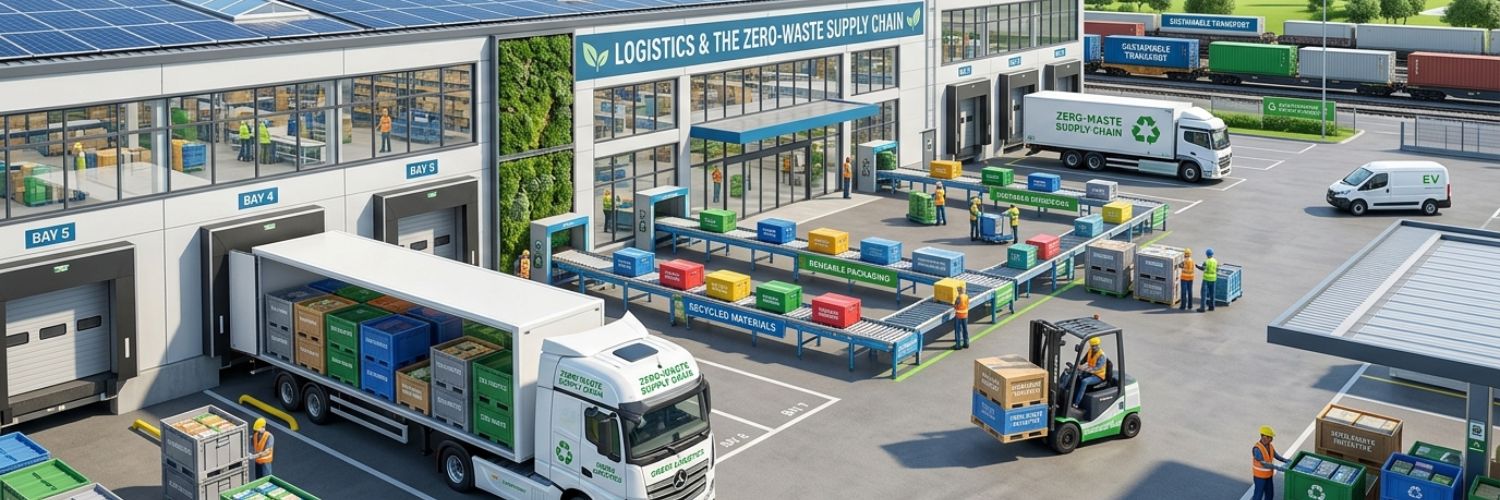
In the hyper-competitive landscape of 2026, the global supply chain is undergoing a radical transition from a reactive ship-and-fix model to a proactive, predictive powerhouse. At the heart of this evolution lies the intersection of Predictive Logistics and the Zero-Waste Supply Chain, a synergy that is turning the traditional logistical nightmare into a streamlined, sustainable competitive advantage.
For decades, supply chains were plagued by the “Bullwhip Effect,” where small fluctuations in consumer demand led to massive, wasteful inventory gluts at the manufacturing level. Today, predictive analytics, powered by real-time satellite telemetry, IoT sensors, and advanced machine learning, has effectively silenced that noise. By analyzing thousands of variables simultaneously, from sudden weather shifts in the Indian Ocean to localized social media trends in Bengaluru, predictive models can now forecast demand with staggering accuracy before a single order is even placed.
The Anatomy of Zero-Waste
A “Zero-Waste” supply chain is no longer a corporate social responsibility (CSR) pipe dream; it is an economic necessity. Predictive logistics achieves this through three critical pillars:
- Anticipatory Shipping
- Dynamic Routing & Fleet Optimization
- Circular Resource Management
The Strategic Imperative
For the modern business leader, mastering predictive logistics is the ultimate way out of the efficiency-versus-sustainability paradox. It proves that the most profitable route is also the greenest. By eliminating the “buffer” inventory that once sat rotting in warehouses, companies are freeing up billions in trapped capital while significantly reducing their environmental footprint.
As India positions itself as a global manufacturing hub, the adoption of these intelligent systems is what will separate the industry leaders from the laggards. The message is clear: the future of logistics isn’t just about moving things faster; it’s about knowing exactly what to move, where it needs to go, and ensuring that not a single gram of resource is lost along the way. In the era of the Zero-Waste Supply Chain, data is the most recycled, and valuable, resource we have.