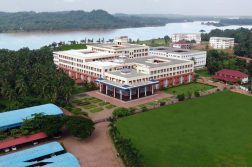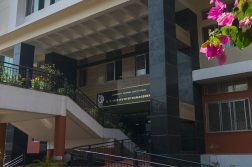
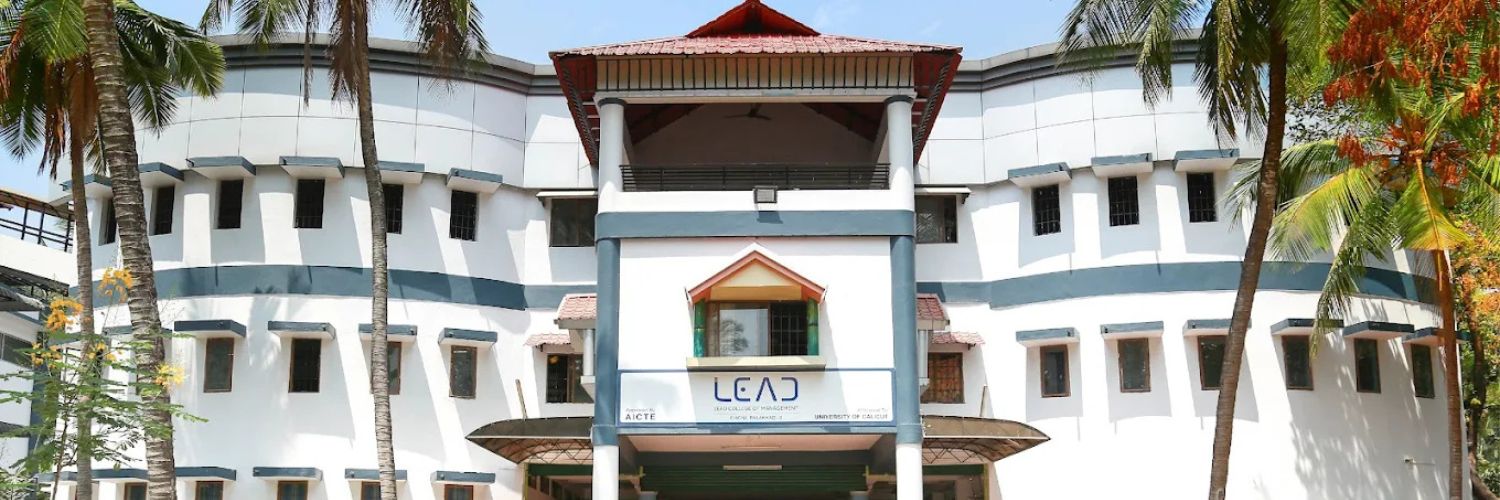
Nestled under the serene and majestic lap of the Western Ghats in Dhoni, Palakkad, LEAD College of Management (Autonomous) reads less like a conventional business school and more like a vibrant, living leadership laboratory. While most management institutions measure their success strictly through rigid corporate templates and classroom hours, LEAD has carved a distinct niche for itself.
At the helm of this transformative institution is Dr. Thomas George K, a visionary leader whose career spans over 25 years across entrepreneurship, international training, and academic excellence. Famously recognized by the India Book of Records as one of the Distinguished Trainers in the Longest Training Marathon, and a regular challenger of conventional academic boundaries, Dr. Thomas brings a deeply experiential ethos to the college. Under his guidance, the curriculum shifts away from standard textbook rote learning to prioritize cultural diversity, global perspectives, and profound community engagement. What truly cements LEAD’s position among India’s elite non-IIM institutions is its radical approach to student autonomy through its unique student-led governance structure.
“LEAD is the perfect recipe for a veritable feast,” Dr. Thomas notes, reflecting on the intense yet deeply rewarding campus life. It is this rare blend of democratic leadership training, robust industry preparation, and a vibrant community spirit that makes LEAD College of Management a standout benchmark for modern management education in India.
Where Academic Autonomy Meets Corporate Reality
Driven by its autonomous status, LEAD College has successfully broken away from static, university-prescribed syllabi to pioneer a dynamic curriculum aligned with the pulse of modern business.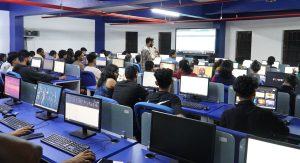 The educational model treats participants as self-directed adult learners who actively co-own their educational journey. This is achieved through an innovative instructional framework where the traditional lecture setup is replaced by case studies, flipped classrooms, and Socratic dialogue. In this environment, faculty members function as active facilitators who immerse themselves directly in the collaborative learning process. By shifting the initial exposure to core concepts outside the classroom through digital content, precious in-class hours are preserved entirely for high-level problem-solving, critical application, and peer-to-peer interaction.
Crucially, the curriculum introduces specialized courses co-delivered by active corporate professionals and resident faculty. This collaborative teaching model embeds expert-led modules from KPMG, practical training on Zoho enterprise applications, and strategic simulation exercises via the IMA Biz Lab platform directly into the academic journey. Rather than limiting focus to conventional corporate career paths, the business school actively champions the spirit of self-reliance and venture creation. By partnering with the Wadhwani Foundation for its Ignite Certification on Entrepreneurship, the institution equips learners with the foundational mindset, startup readiness, and tactical skills required to launch new businesses. This forward-looking framework is further reinforced by specialized credentials in AI and next-generation technologies.
The 24×7 Management Lab
When asked how the fully residential Palakkad campus utilizes its modern infrastructure and student-run initiatives to drive authentic management skills, Dr. R. Chandrasekhar Menon, Professor, painted a picture of a vibrant, continuous learning ecosystem. “The traditional boundaries of a classroom dissolve the moment a student steps onto this campus,” Dr. Menon noted. “Learning does not pause when the final bell rings. Mornings regularly begin with strategic planning huddles, while nights frequently close with critical debriefs and tight deadlines.” In between these markers, individuals constantly juggle academic commitments with live projects, direct client interactions, and campus-wide operations. Because the timelines are absolute and the performance expectations are rigorous, teamwork becomes a non-negotiable survival skill.
At the very core of this experiential model are the Leadership Operational Excellence Teams (LOTs). Dr. Menon explained that these teams are structured precisely like corporate verticals, operating as fully functional mini-organizations. Students are carefully grouped into fifteen distinct core operational areas based on their specific professional interests and aptitudes, managing critical institutional processes for three full semesters alongside dedicated faculty mentors. The true potency of this infrastructural model lies in its highly multidisciplinary and collaborative execution.
From Campus to Corporate
The industry linkages cultivated by LEAD College of Management, paired with the enduring professional legacy of Dr. Thomas George K, have driven exceptional corporate recruitment milestones for the graduating management batch. Out of an approved intake of 360 students, 311 formally registered for the campus recruitment drive, while 55 individuals made the strategic decision to opt out of the placement process to launch independent startups and alternative business endeavors. From the remaining 256 candidates who actively participated in the recruitment cycle, 203 students successfully transitioned into corporate roles, securing a stellar placement rate of 91.46 percent for the institution.
A landmark highest salary package of ₹21.67 LPA was awarded by the prominent global firm Amana Insurance Brokers, setting a high benchmark for the season. This top-tier achievement was complemented by a strong institutional average salary of ₹5.86 LPA and a dependable median salary of ₹5.00 LPA.
A diverse spectrum of sector leaders spearheaded the hiring phase, opening up premium career paths across consulting, retail, technology, and fast-moving consumer goods verticals. Global consulting and advisory powerhouses like Alliantgroup and KPMG led the charge in talent acquisition. This recruitment momentum was further propelled by prominent retail and lifestyle giants including ABFRL Pantaloons, D365 Solutions Private Limited, and Wildcraft, alongside strategic placements from market leaders Dabur India Limited and Experion Technology. Building upon these institutional benchmarks, the business school continues to aggressively enhance its corporate relations framework, targeting a consistent 95 percent placement threshold and steadily rising median compensation packages in its upcoming academic cycles.
Competing on the World Stage
Looking ahead, the strategic evolution of LEAD College of Management is anchored in a clear, multi-tiered roadmap designed to elevate the institution to international prominence. Director Dr. Thomas George K outlines a future that seamlessly balances immediate operational milestones with an expansive, long-term plan that aligns with global academic standards.
“Our immediate priority over the next three to five years is to solidify our foundation of institutional excellence while introducing highly specialized, future-ready programs,” Dr. Thomas explains. To achieve this, the business school is actively targeting its second cycle of NBA accreditation to reinforce program-level quality assurance, alongside securing the coveted NAAC A++ rating. This phase will also see an aggressive push to enhance faculty research publications and expand high-impact corporate partnerships. Crucially, this near-term strategy will culminate in the launch of a specialized Innovation and Entrepreneurial MBA, a program designed specifically to nurture the next generation of job creators and venture catalysts.
The long-term vision shifts the business school’s trajectory toward establishing a definitive global and national footprint. “We are not just building a regional center for learning; we are designing an institution capable of competing on the world stage,” Dr. Thomas concluded.