
In the competitive landscape of Indian management education, true leadership is defined by the ability to harmonize decades of academic tradition with the disruptive demands of the modern economy. The Faculty of Management and Commerce (FMC) at Ramaiah University of Applied Sciences stands as a testament to this balance. Built upon the storied 60-year legacy of the Ramaiah Group, a name synonymous with educational excellence in India, FMC has transitioned the group’s foundational values into a contemporary powerhouse. It isn’t just a business school, it is an ‘Applied’ ecosystem where the precision of business meets the agility of industry-integrated learning.
The Strategic Ecosystem
While the Faculty of Management and Commerce (FMC) was formally instituted in 2014, its rapid ascent within the Indian B-school hierarchy is no accident. Operating as a vital organ of the Ramaiah University of Applied Sciences (RUAS), the FMC transcends the rigid disciplinary ethos that often constrain traditional business education. It thrives within a vibrant, multi-dimensional ecosystem where management strategies intersect with engineering precision, healthcare innovation, and social sciences. By embedding management education within a framework of applied research and outcome-based results, FMC has effectively bridged the gap between academic theory and the volatile demands of the global market.
At the Heart of Innovation
Strategic location is often the silent architect of a B-school’s success, and for FMC, being headquartered in Bengaluru – India’s silicon hotspot, is a transformative asset. The faculty leverages this geography to offer a sophisticated portfolio ranging from BBA (Hons) and B.Com (Hons) to high-impact MBA with dual specialisation and Ph.D. tracks. However, the distinction lies in the depth of these programs, acting as specialized pathways into Business Analytics, Financial Engineering, and Digital Transformation.
The pedagogical core is defined by a shift from passive observation to ‘Action Learning.’ While many institutions treat interdisciplinary study as an elective, FMC mandates it as a standard. Management students don’t just study market entry strategies in a vacuum, but collaborate with the University’s engineering and health science departments to commercialize real-world innovations. This immersion is further sharpened by a curriculum calibrated for Industry 4.0, utilizing advanced simulation-based training and live consulting projects that mirror the complexity of the global boardroom.
Strengthening Faculty and Pedagogy
At the heart of FMC’s success is an elite faculty body that functions as a bridge between high-concept research and corporate reality. The institution has moved beyond traditional recruitment, intentionally curating a mix of decorated academicians with the presence of ‘Professors of Practice’ from Industry.
To maintain this edge, the faculty operates within a culture of continuous evolution. Through structured Faculty Development Programmes (FDPs) and deep-tier industry residencies, the educators themselves remain as agile as the students they mentor. Most notably, as we move into the 2026 academic cycle, FMC is pioneering an institutional shift toward Technologically Augmented Pedagogy. By fully integrating Artificial Intelligence across its academic delivery, the faculty is not just teaching for the future, they are leveraging the tools that will define the next decade of global business.
The Connected Campus Experience
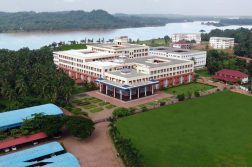
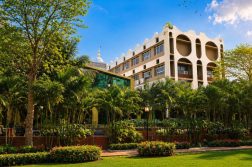
FMC’s physical presence within the expansive Gnanagangothri Campus, a 70-acre ecosystem housing 18 legacy institutions, provides a scale of infrastructure rarely matched by standalone B-schools. The learning environment is a sophisticated hybrid, where traditional lecture halls are replaced by smart-classrooms featuring seamless live-streaming and global connectivity.
Beyond the standard amenities, the Faculty has invested heavily in specialized Business Simulation Labs and data centers. Here, students utilize advanced Learning Management Systems (LMS) and mathematical modeling tools to test strategies in real-time, as well as risk-free environments. This digital infrastructure is anchored by a massive central library, providing remote access to high-tier databases like PROQUEST, CMIE, and EBSCO.
Furthermore, the FMC experience is physically integrated with the Ramaiah Technology Business Incubator (RTBI). This placement ensures that management students are never more than a few steps away from the university’s startup heartbeat.
Cultivating Global Competencies
At FMC, research is reimagined as a high-value tool for industrial problem-solving. This ‘Applied Research’ mandate is fueled by a culture of inquiry, exemplified by the ‘Research Café’, a unique intellectual hub that fosters cross-disciplinary dialogue between faculty and students. By incentivizing funded projects and global publications, FMC ensures that its academic output isn’t just stored in archives but is actively contributing to the evolution of management theory.
Adding to the rigor displayed in the domain of research, the strong industry-academia relationships existing at FMC allow a year-round dialogue with the corporate world. Through a network of global partnerships and institutional MoUs, the faculty facilitates a high-octane immersion program featuring Global Internships, Strategic Live Projects, and C-Suite Guest Lectures. Because it is situated within the broader MSRUAS ecosystem, FMC students benefit from the university’s international footprint, gaining exposure to global innovation standards that prepare them for careers that transcend geographical boundaries.
The Road Ahead
In the days to come, the Faculty of Management and Commerce at RUAS looks forward to a clear roadmap – which houses a complete synthesis of emerging technologies with adaptive, student-centric learning.
With an aggressive expansion of its global industry network and a strong focus on high-employability outcomes, FMC-RUAS has solidified its position as a premier destination for the next generation of leaders. It remains an institution that honors the prestigious Ramaiah legacy while fearlessly embracing the digital future.