The drive to build something timeless often stems from a deep-seated connection to one’s roots. For Mr. Suresh Vijaywargia, this journey began in 1944 within a business family in Bhopal, where he developed a natural aptitude for leadership and a keen eye for opportunity. Even as he built a promising career in the United States during the 1970s, his ambition remained tethered to the idea of returning home to contribute to the city that shaped him.
Upon his return in the early 80s, Mr. Vijaywargia pioneered modern retail and construction in Bhopal, but his focus shifted toward social impact following the Bhopal gas tragedy. He founded the People’s General Hospital to serve the affected community, a philanthropic move that gave rise to the Sarvajanik Jankalyan Parmarthik Nyas. This charitable trust transformed a vision of service into a sprawling 84-acre educational landmark known as People’s University, now one of Central India’s largest hubs for healthcare, technology, and professional excellence.
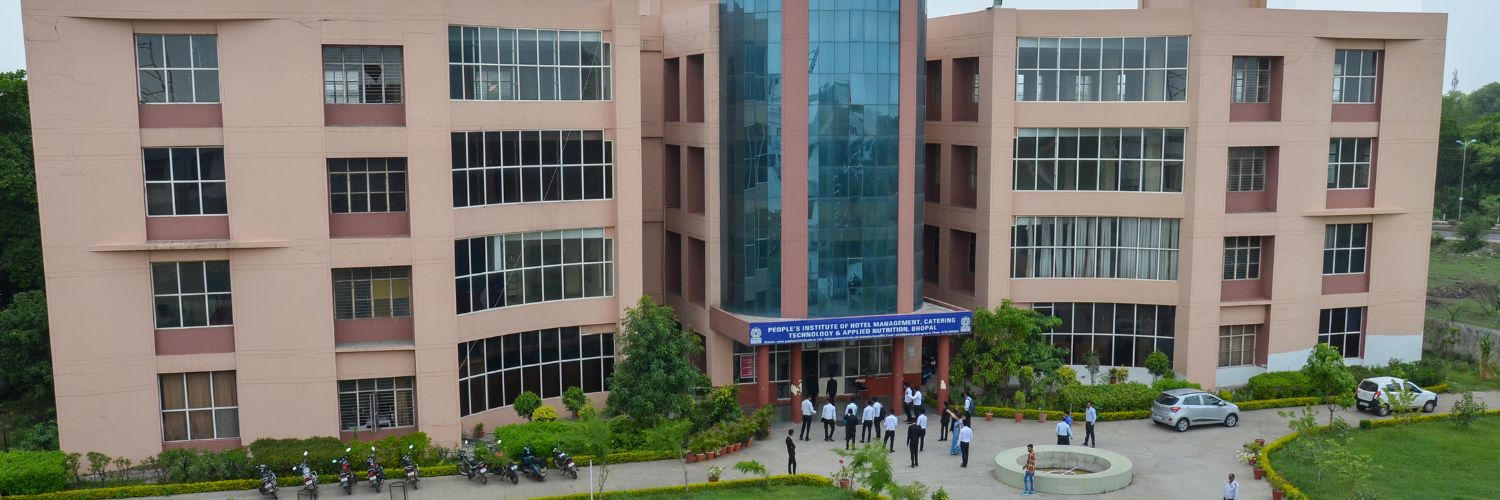
At the heart of this academic ecosystem is the People’s Institute of Management & Research (PIMR). Established to bridge the gap between academic theory and corporate demand, PIMR leverages the university’s vast resources to deliver research-driven management education. Its inclusion in the B-School Survey of 2026 reaffirms its standing as a premier destination for aspirants seeking a blend of entrepreneurial legacy and modern industry readiness.
Blending Theory with Real-World Immersion
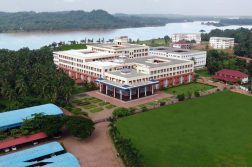
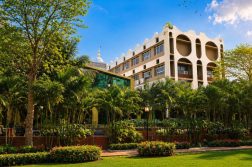
Nestled on a 5-acre land within the People’s Campus, the b-school occupies a curated space surrounded by serene landscapes and lush greenery. The People’s Institute of Management & Research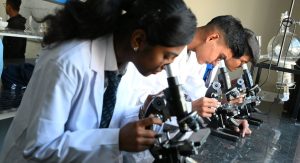 distinguishes itself through a pedagogical framework that harmonizes rigorous management theory with research-driven instruction and significant practical immersion. By moving beyond conventional rote learning, the college utilizes case-based methodologies and live projects. This holistic approach further integrates entrepreneurship development and ethical grounding.
The institution’s MBA specialisations have undergone a strategic evolution to address the digital and operational complexities of the 2026 corporate climate. Apart from offering a wide array of dual specialisations, including niche areas like Retail Brand Management, Business Analytics, Operations & Supply Chain Management, Marketing, Finance, Human Resource, the hallmark of this advancement is the MBA in Hospital Administration. This particular track utilizes the massive 1500-bedded People’s Hospital on-site as a real-time laboratory for mastering complex healthcare operations. The current curriculum has been infused with forward-looking modules such as predictive healthcare analytics, AI-driven digital health solutions, and telemedicine platforms, all while maintaining a strict focus on global safety standards like NABH.
Parallel to its healthcare focus, the MBA program at PIMR has been refined through close collaboration with industry partners to remain synchronized with fluctuating market trends. Students engage in a curriculum that heavily incorporates information technology for business and advanced research methodologies to navigate global supply chain disruptions. A distinctive feature of this program is the intensive training structure, which mandates a 45-day on-the-job residency following a year of dedicated on-campus study.
Mentorship Beyond the Classroom
The People’s Institute of Management & Research maintains a teaching body defined by a Dual-Expertise model. The faculty recruitment strategy prioritizes a blend of seasoned PhD holders with prolific research backgrounds and industry veterans who have previously mastered sectors such as logistics, finance, and healthcare.
Additionally, via the Mentor-Mentee program, faculty members engage with students beyond traditional lecturing roles to serve as dedicated personal guides, assisting students with research publications, career mapping, and individual development goals. This support extends well beyond the classroom, with teachers facilitating remedial sessions and overseeing project work within the campus’s high-tech labs.
The commitment to high-quality instruction is sustained through mandatory Faculty Development Programs (FDPs). By actively coordinating extracurricular clubs and supervising advanced technical projects, the faculty ensures that the learning process remains continuous and relevant.
A Living Laboratory
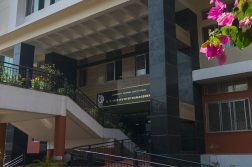
The infrastructure at the People’s Institute of Management & Research is designed to function as a living laboratory. The campus is anchored by high-end facilities, including air-conditioned lecture halls, syndicate rooms for group strategy sessions, and a state-of-the-art computer center. The academic experience is further supported by one of the region’s premier management libraries and a fully Wi-Fi-enabled campus.
Beyond the classroom, the ISO-certified green campus provides a self-contained residential environment that prioritizes student well-being and physical growth. The grounds feature extensive sports complexes with facilities for lawn tennis, badminton, and table tennis, alongside a modern gymnasium and dedicated spaces for yoga. Social life centers around a fully equipped canteen and a TV lounge, while residential needs are met through executive hostels and on-site accommodations for staff. This comprehensive setup is supported by essential services, including a bank and global connectivity tools, creating a 24/7 learning culture.
Scaling Employability and Innovation
Reflecting the leadership and strategic direction, Dr. Megha Vijaywargia, Trustee of the Sarvajanik Jankalyan Parmarthik Nyas and Pro-Chancellor of People’s University, stands as an illustrious example of the impact a private effort can have on India’s public health and education sectors. Holding a doctorate and a postgraduate degree in commerce, she has been instrumental in steering the People’s Institute of Management & Research toward a calculated future. When discussing the b-school’s tactical roadmap for 2026, Dr. Vijaywargia emphasizes a dual commitment to digital transformation and measurable employability outcomes.
Dr. Vijaywargia notes that the institution’s goal is to remain ahead of the curve, stating, “Our focus is on equipping students with the digital fluency required to lead in an era of rapid technological disruption.” However, she remains equally committed to the social mission of the trust, specifically regarding financial accessibility. To counter the rising costs of higher education, she has overseen the expansion of the institute’s merit-based scholarship pool. “We believe that financial constraints should never be a barrier to excellence,” she asserts, ensuring that PIMR and People’s University remain as diverse and inclusive environments where talent is the primary currency for success.