
As India asserts itself as a global ‘Vishwa-Guru’ in technology and innovation, the benchmarks for academic excellence have fundamentally shifted. By 2026, the modern engineering aspirant has moved beyond the traditional ‘placement-first’ mindset, seeking institutions that prioritize intellectual property, disruptive research, and cross-disciplinary mastery.
Standing at the heart of this educational change is the School of Engineering and Sciences (SEAS) at SRM University-AP. Within a remarkably short span, SEAS has rewritten the blueprint for the modern Indian technical school. Through its strong focus on interdisciplinary learning, research-driven programmes, and global partnerships, it isn’t just participating in the race for quality education but defining it, consistently proving its mettle among the nation’s finest. At its core, SEAS is a melting pot of global talent, housing an impressive population of over 11,000 learners from 28 Indian states and across 30 nations.
Mentoring Greatness
Comprising ten specialized departments, SEAS functions as a synergistic ecosystem where interdisciplinary cooperation is the standard. This team spirit is carried forward by a formidable camaraderie displayed by 400+ faculty members, each possessing PhDs and post-doctoral expertise from the world’s premier institutions, while promoting a robust mentor-mentee framework. SEAS is also a proud home to several professors in Stanford University’s elite list of the top 2% of global scientists.
The curriculum itself is a dynamic fusion of theoretical depth and industrial relevance. By ensuring that 20% of the coursework is delivered by industry veterans and international scholars, the school provides students with direct access to global market requirements. This is reinforced by an Active-learning pedagogy and an Outcome-Based Education (OBE) model that aligns strictly with the National Education Policy (NEP) 2020. Whether through specialized minors in emerging technologies or mandatory modules on Entrepreneurial Mindset, the focus remains always on good quality corporate placements, advanced research, and startup leadership.
Engineering the Future
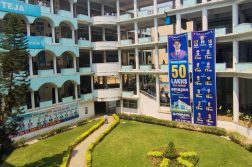
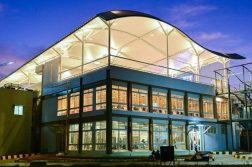
 Designed by the well-known American firm Perkins + Will, the SEAS facility is located within the SRM University-AP campus in Amaravati. The environment is both large and high-tech, housing 80 advanced laboratories and more than seven specialized Centres of Excellence. These facilities are built so that students can get hands-on experience with complex technologies like Nanotechnology and Virology, as well as modern fields like Artificial Intelligence and Geospatial Technology.
SRM University-AP is particularly known for its sports facilities and recreational areas. And for those living on campus, the spacious hostels accommodate over 5,000 students with both AC and non-AC options. This residential setup ensures that learning continues even after class hours, supported by a system of personal guidance and care that helps students grow both professionally and personally.
A major highlight of the infrastructure is the Quantum Reference Facility, created in partnership with the Government of Andhra Pradesh. This is the first of its kind in India and one of only four such facilities in the world.
The Heart of SEAS
In addition to technical excellence, SEAS focuses on the overall growth of every student through a supportive campus culture. Managed by the Directorate of Student Affairs, this environment ensures that personal development is treated with as much importance as technical learning.
Programs like the NCC and NSS play a key role in this mission, offering students a dedicated space to build essential leadership skills and a spirit of teamwork. By participating in these initiatives, graduates develop the strong character and discipline needed to succeed in the modern professional world.
From Campus to the World
A key strength of SEAS is its commitment to industry-integrated education. By building a network of strategic partnerships, the school ensures that its research and teaching stay aligned with the real world. This includes a specialized focus on clean energy through its work with JK Srivastava Hynfra P.S.A. Ltd on green hydrogen. Other major collaborations with leaders like Titan Company Limited, Amara Raja Batteries, and Tanishq help bring industry insights directly into the classroom.
Not only are the industry-ties local, but SRM University-AP positions itself as a global gateway. With partnerships spanning over 70 international universities, including UC Berkeley, Monash University, and the University of Wisconsin-Madison, students have access to Semester Abroad and Global Immersion programs.
These strong connections lead to impressive career outcomes. Supported by a network of over 1,200 recruiters, SEAS has achieved a highest domestic salary package of 55 LPA and an international peak of 50 LPA, with a solid average of 9.6 LPA. To date, students have secured over 550 job offers, including more than 100 international placements. Graduates are regularly hired by global giants such as Amazon, Microsoft, JPMorgan Chase & Co., Barclays, and Toshiba.
To ensure students are ready for these high-stakes roles, the Academy for Industry Readiness (AIR) provides training in essential 21st-century skills. Specific initiatives like ‘Destination Japan’ also offer specialized language and cultural training, preparing students for successful careers in international hubs like Japan, Taiwan, South Korea, and Germany.
The Entrepreneurial Edge
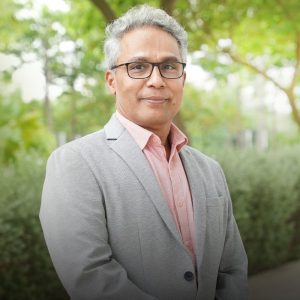
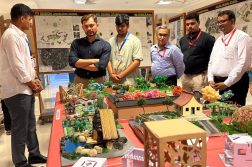
According to the Dean Prof. C. V. Tomy – apart from placing students across top companies, SEAS has expanded to cultivating trailblazers who can thrive in the global startup ecosystem. Central to this vision is the university’s business incubator, the Hatchlab Research Centre (HRC). This hub has already signed over 20 MoUs with prominent companies and investors, resulting in the launch of more than 50 successful startup ventures in sectors like EdTech, AI-driven services, and sustainable engineering.
“Our goal is to move past the traditional classroom setup and create a space where students feel empowered to build their own futures,” notes Prof. Tomy. He explains that the school provides a complete support system, including Entrepreneurship Boot Camps and ideation challenges designed to build business acumen. Through a structured pre-incubation process, students receive mentoring on everything from prototype development to pitching their ideas to investor networks.
The impact of these initiatives is backed by high-level recognition. The HRC is officially recognized by the Ministry of MSME and the Ministry of Electronics and Information Technology (MeitY) as a Centre for Innovation. To help young entrepreneurs get off the ground, the school provides access to seed grants of up to ₹5 lakh.
The Power of Discovery
 The intellectual output at SEAS is a primary driver of the university’s growing brand value. This trend is evident across the faculty’s research portfolio that includes over 3,500 indexed publications and more than 80 papers in the renowned Nature Index. This culture of innovation is further proven by a strong focus on intellectual property, with 550 patents published and 63 already granted to date.
Prof. Tomy emphasizes that in this very context, the in-house Technology Transfer Cell plays a vital role in this journey by helping both faculty and students manage and commercialize their Intellectual Property (IP). “By focusing on the strategic side of innovation, we help our researchers turn groundbreaking inventions into viable products that solve real-world problems,” he adds.
A standout example of this “lab-to-market” success is found in the Department of Mechanical Engineering. Researchers here have developed a groundbreaking technology to increase the hardness of 22k gold. This innovation allows for stronger, lighter jewelry, a breakthrough that has led to a flagship consultancy project with Titan Company Ltd.
The quality of these departments has earned significant national recognition. In a short period, the Chemistry, Physics, and Mechanical Engineering departments have all been selected for the Government of India’s DST-FIST program. This specialized funding supports the installation of advanced instrumentation. These efforts are fueled by a steady stream of research grants from top-tier agencies like ISRO, ICMR, DST, and the Anusandhan National Research Foundation (ANRF), often in direct collaboration with industry leaders such as Titan and Amara Raja Batteries.
The Next Frontier
For Prof. C. V. Tomy, the next phase of SEAS is defined by the strength of its people. “Our mission is to build an environment that doesn’t just advance knowledge but delivers transformative solutions to the world’s most pressing challenges,” the Dean explains. To achieve this, the school is sharpening its focus on three critical pillars – Artificial Intelligence, Energy, and Quantum research. A significant part of this strategy is already in motion through a high-level faculty development initiative. Recently, four faculty members returned from specialized training at the Carnegie Mellon University (CMU) School of Computer Science, while another four are currently undergoing similar advanced training. This partnership will continue over the next two years, with these experts set to lead a dedicated AI Institute at SRM-AP. The goal is to integrate AI across every academic department and establish state-of-the-art laboratories for hands-on training in robotics and cutting-edge digital domains.
Looking ahead, both at SEAS and SRM University-AP, the strategic priority remains towards solidifying its reputation as a top-choice in India. By showcasing its innovation ecosystem and strengthening its global partnerships, the management aims to lead national rankings and accreditations. “We are positioning SEAS (SRM-AP) not just as a center for learning, but as a global leader in engineering excellence,” Prof. Tomy concludes.