
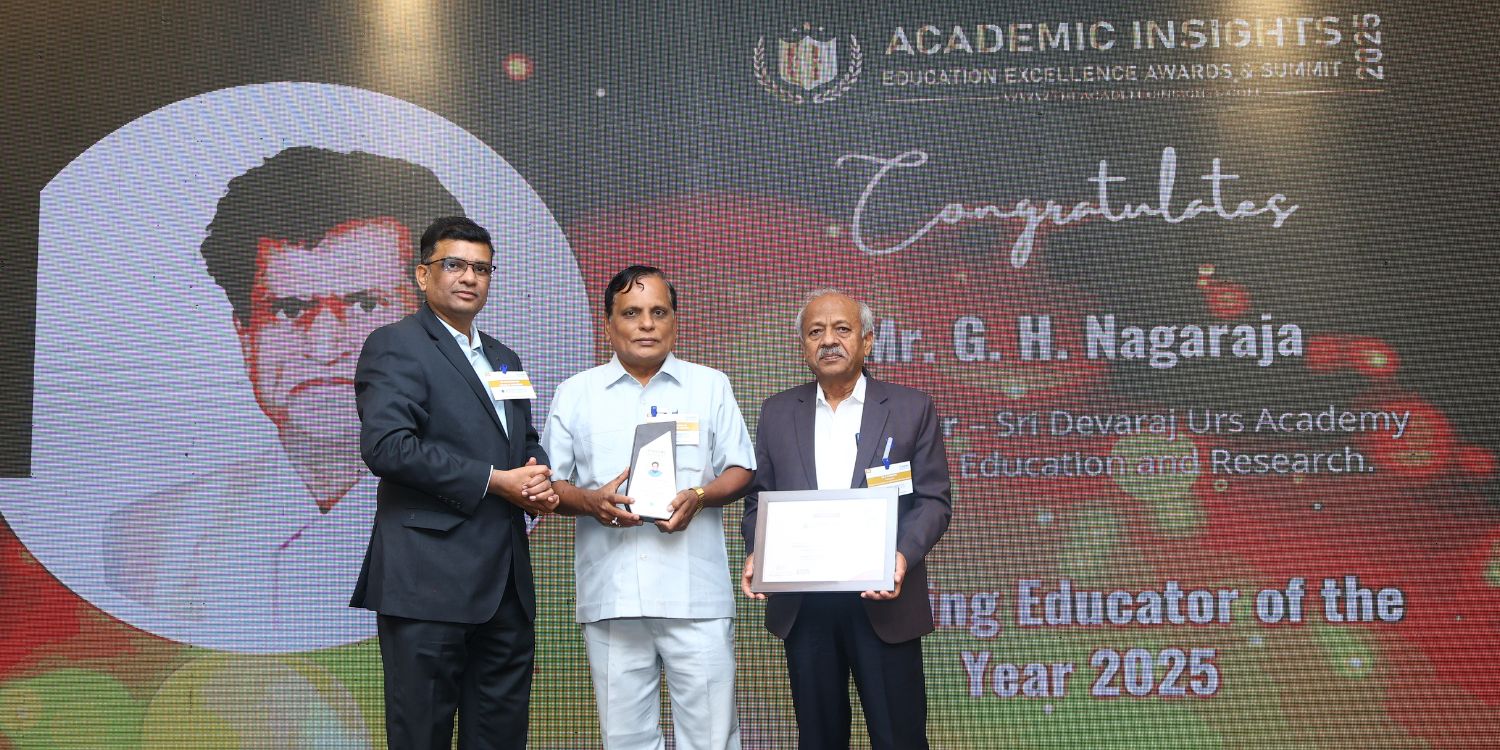
In India, rural communities continue to face significant barriers to accessing even basic education and healthcare facilities, this mirrors the deep structural inequalities in infrastructure and resources. Those who have lived this reality and choose to change its trajectory through purposeful action embody a rare form of leadership.
Rising from such circumstances requires resilience, vision, and an enduring commitment to public welfare and it becomes an honour to recognize Mr. G. H. Nagaraja, whose work in advancing rural education and healthcare access has transformed countless lives. To acknowledge him under the title of “Inspiring Educator of the Year 2025,” is to appreciate his strong vision and determination to become significant through his actions which continue to inspire many for generations.
Early Life and Foundational Influences
Mr. G. H. Nagaraja’s leadership philosophy is deeply rooted in his early exposure to rural realities and community-centred values. Growing up in the Kolar region, he witnessed firsthand the structural inequalities that shaped everyday life, particularly the limited access to education and healthcare in rural communities. Yet he was installed with humility, discipline, and collective responsibility through which he developed a strong orientation toward service rather than personal advancement. A defining influence during this period was his observation of how even a single educational opportunity could transform an entire family’s trajectory. This insight shaped his enduring belief that leadership is not an exercise of authority but a stewardship role centred on nurturing overlooked potential. These early values later became integral to his institutional vision and continue to inform his administrative approach.
Academic Journey and Mentorship
Mr. Nagaraja’s academic path was characterised by an interest in applying knowledge to real-world challenges rather than pursuing theoretical achievement alone. However, the most decisive turning point in his intellectual and professional development emerged through his association with the late Shri R. L. Jalappa, a prominent leader in the cooperative movement and a pioneer of educational access for backward communities.
Under Jalappa’s mentorship, Mr. Nagaraja was exposed to a model of leadership that combined strategic foresight with deep social commitment. This period profoundly shaped his administrative outlook, reinforcing the idea that institutional leadership must be anchored equally in compassion and organisational competence. His subsequent progression from Secretary of the Trust to Chancellor reflects a sustained continuity of this guiding philosophy.
Building the SDUAHER Ecosystem
Mr. Nagaraja’s association with Sri Devaraj Urs Academy of Higher Education and Research (SDUAHER) dates back to its foundational stages. He played an active role during the establishment of the educational trust and later in the development of the medical college in 1986. Over the decades, his leadership contributed to the transformation of a single institution into a comprehensive educational network encompassing disciplines from early schooling to doctoral research.
This growth culminated in SDUAHER attaining deemed-to-be university status in 2007, along with national accreditation and international quality certifications. For Mr. Nagaraja, the institution’s most significant achievements are not structural expansions but the tangible social outcomes it has enabled, including the emergence of healthcare professionals from rural backgrounds and the active service of alumni during the COVID-19 pandemic.
Leadership Responsibilities and Institutional Direction
As Chancellor, Mr. Nagaraja stands by his guiding principle of “knowledge with wisdom,” he states, “My responsibility is to ensure we do not drift from our core mandate of serving the rural and backward classes while simultaneously competing with global standards.”
His leadership priorities encompass expanding multidisciplinary academic offerings, fostering innovation through incubation initiatives, and managing a complex institutional ecosystem spanning multiple campuses and professional fields. Recent developments such as the introduction of a School of Law and the strengthening of research and entrepreneurial support structures illustrate a strategic effort to diversify the institution’s intellectual scope while maintaining its rural engagement focus.
One of the most persistent challenges during his tenure has been maintaining affordability in an environment where educational costs and technological requirements continue to escalate. Mr. Nagaraja addressed this issue through a model of financial wisdom combined with institutional sustainability measures, particularly by strengthening healthcare service operations that support academic funding.
Vision for the Future
Looking ahead, Mr. Nagaraja envisions SDUAHER evolving into a globally recognised centre of excellence that remains firmly rooted in regional service. His strategic framework integrates academic innovation, research relevance, and expanded healthcare outreach. Central to this vision is the commitment to translating research into practical solutions addressing socio-economic challenges and strengthening the institution’s role as a primary healthcare anchor for rural Karnataka.